
Structures
Terracing, Outdoor Steps & Seat Walls in North Georgia
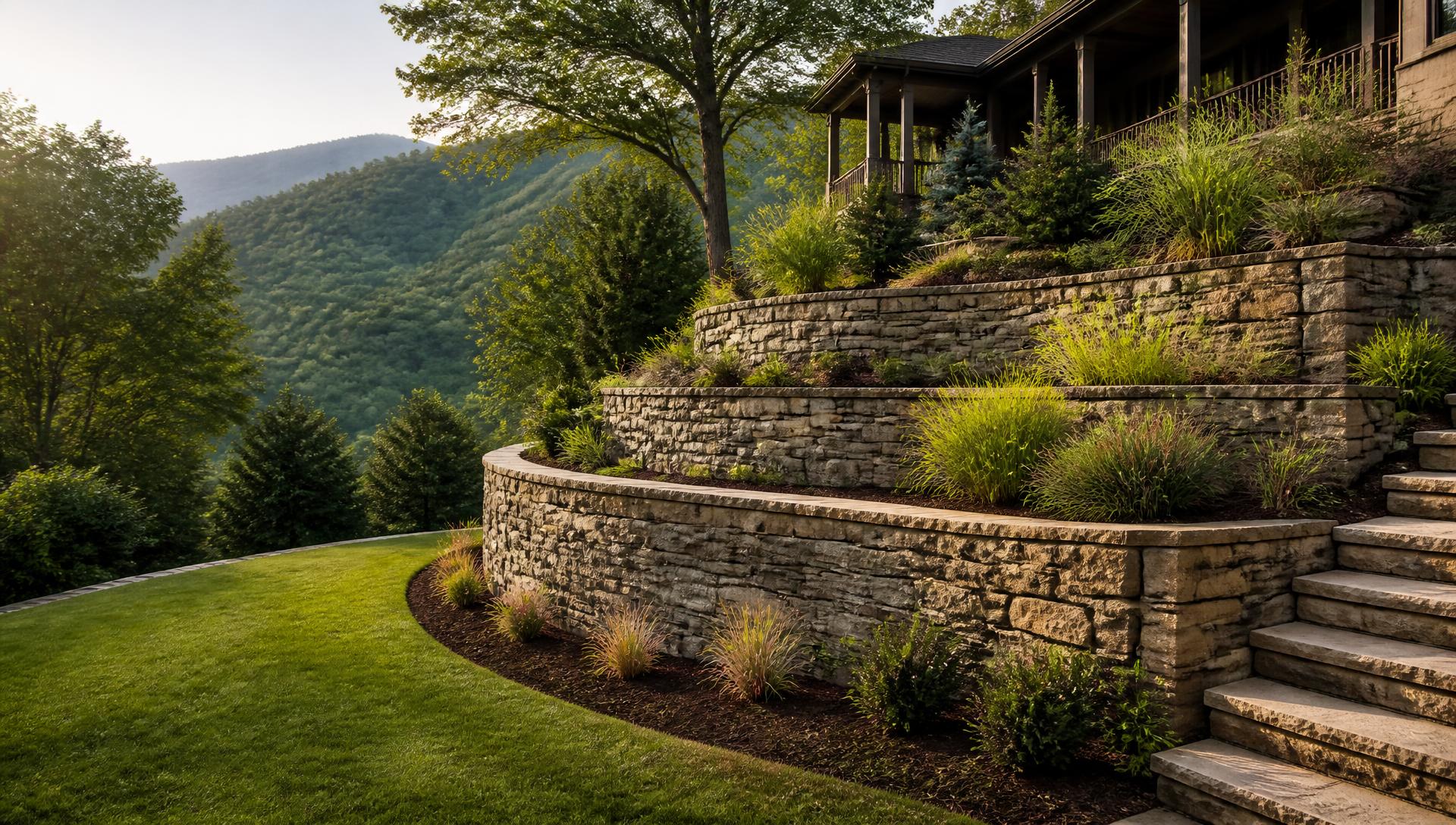
Terraced slopes, stone steps and seat walls that turn unusable hillside into level, usable outdoor space.
Steep ground is wasted ground. Terracing converts a slope into level areas you can plant, park furniture on, or walk across safely — and steps in stone or block make the connection between them feel deliberate rather than improvised.
Part of our Retaining Walls & Slope Grading in North Georgia work across North Georgia.
What we see most often
- Slopes too steep to mow, plant or walk on safely
- Railroad-tie steps rotting and shifting underfoot
- Inconsistent riser heights that people trip on
- Terraces built too close together without accounting for combined load
Scope of work
What this work includes
Terrace layout
Slope broken into level benches with wall heights and setbacks that keep each terrace independent rather than stacked loads.
Steps & stairways
Natural stone slabs, block treads or masonry steps with consistent risers, proper bearing and drainage under each tread.
Seat walls & edging
Low walls that double as seating around patios and fire features, with caps sized for comfortable use.
Drainage & planting
Drainage behind every wall plus planting beds on the level areas so terraces stabilize and look established quickly.
Level, walkable, plantable space where you previously had a hillside.
How it goes
Our process
- Step 01
Study the slope
Measure fall and decide how many levels it wants.
- Step 02
Set levels
Lay out terrace heights, step runs and landings.
- Step 03
Build
Base, drainage and wall construction, terrace by terrace.
- Step 04
Finish
Treads, caps, soil, planting and lighting.
Common questions
Terracing & Steps questions we get
- Is terracing cheaper than one tall wall?
- Sometimes, because shorter walls may avoid engineering. But terraces set close together behave structurally as one tall wall, so the savings only appear when the benches are properly separated.
- What is a comfortable step riser outdoors?
- Outdoor steps typically use lower risers and deeper treads than indoor stairs — often around six inches with a generous tread. Consistency matters more than the exact number.
- How high should a seat wall be?
- Around eighteen inches including the cap is comfortable for most people, with a cap wide enough to sit on without an edge digging in.
- Can terracing fix an erosion problem?
- It helps by breaking slope length, but only when combined with drainage above and planting on the benches. Terraces alone do not stop concentrated flow.
Where we work
Retaining Walls across North Georgia
We handle retaining walls for property owners across the north side of Atlanta — Cumming, Milton, Alpharetta, Roswell, Buckhead, Sandy Springs, Marietta, Woodstock, Canton and Ball Ground — and up through Jasper, Ellijay and Blue Ridge. Choose your area for local conditions, permitting and recent work nearby.
- Retaining Walls in AlpharettaFulton County
- Retaining Walls in RoswellFulton County
- Retaining Walls in Johns CreekFulton County
- Retaining Walls in BuckheadFulton County
- Retaining Walls in Sandy SpringsFulton County
- Retaining Walls in MariettaCobb County
- Retaining Walls in East CobbCobb County
- Retaining Walls in WoodstockCherokee County
- Retaining Walls in JasperPickens County
- Retaining Walls in EllijayGilmer County
- Retaining Walls in Blue RidgeFannin County
- Retaining Walls in DahlonegaLumpkin County
- Retaining Walls in HelenWhite County
- Retaining Walls in GainesvilleHall County
Regional overviews: Retaining Walls in Atlanta Metro, Retaining Walls in Lake Lanier, Retaining Walls in North Georgia Mountains, Retaining Walls in North Atlanta.
Also serving Cumming, Milton, Canton, Ball Ground, Dawsonville, Cartersville, Blairsville, Cleveland.
Related work
Start here
Tell us about your property
Send the basics and we'll come back with a straight answer on what your site needs, what order to do it in, and what it's likely to cost.