
Johns Creek, Georgia
Retaining Walls in Johns Creek, Georgia
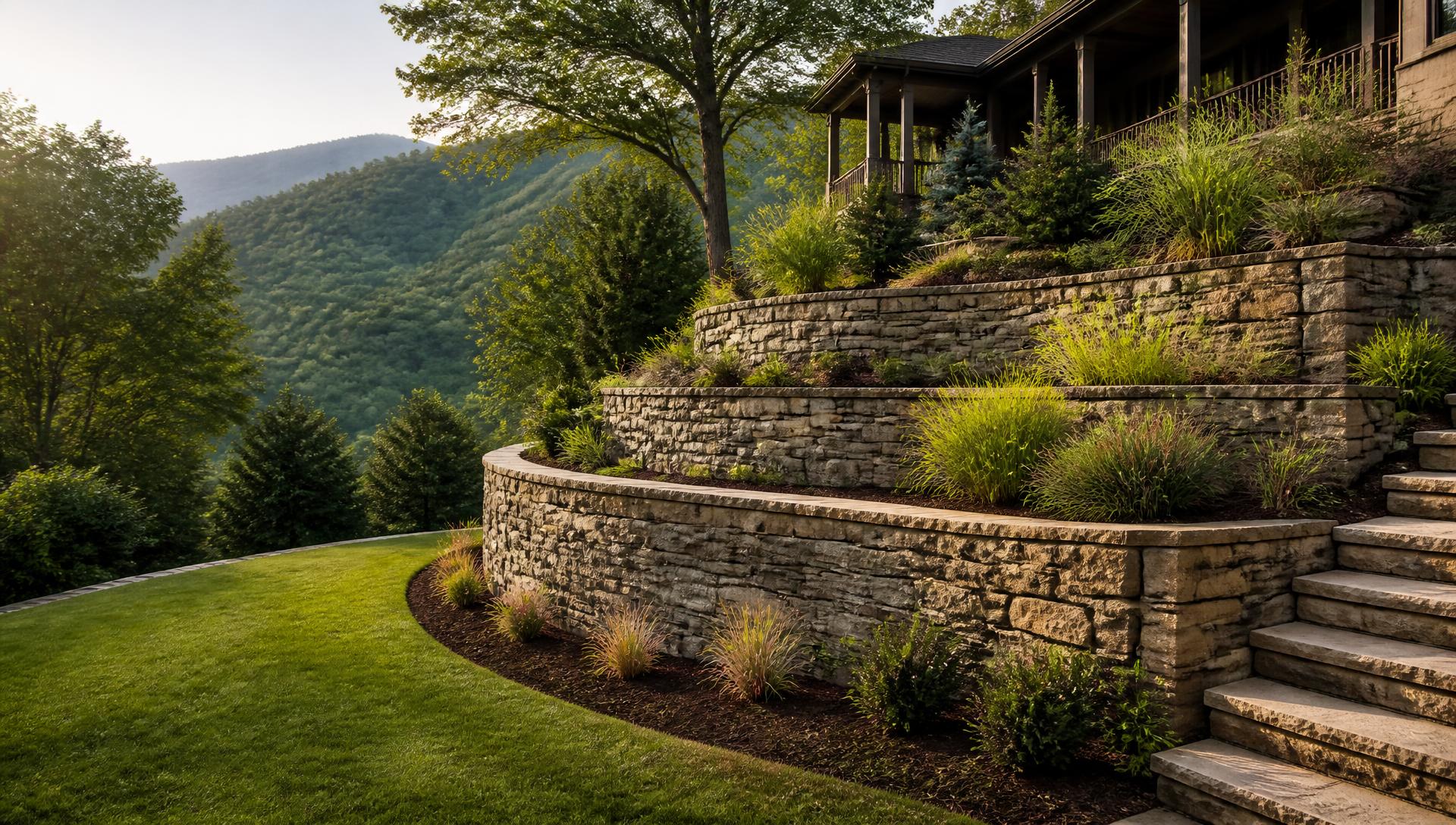
We build walls that maximize flat, usable yard space on Johns Creek's compact lots, engineered for proper drainage behind the wall so water doesn't undermine the structure or a neighbor's grade.
Start your property projectRetaining Walls & Slope Grading in North Georgia
Retaining walls engineered for tight lots
Johns Creek developed later and more densely than its neighbors to the west, and its luxury neighborhoods — Country Club of the South, St. Ives, Sugar Mill — were platted with quarter-acre to half-acre lots rather than sprawling acreage. That density means setbacks, easements, and neighboring drainage patterns all constrain what's buildable, and a site plan here has far less margin for adjustment once work begins than a project on raw acreage.
Most failed walls in this region didn't fail structurally — they failed because water had nowhere to go. Every wall we build is a drainage system first and a stone feature second.
Full Retaining Walls serviceWhat we see locally
- Existing walls leaning, bulging or shedding stone
- Steep ground that leaves no flat, usable yard
- Erosion cutting behind and beneath wall footings
- Terraces that trap water against the house
Scope of work
How the work runs on a Johns Creek property
Natural stone & boulder walls
Locally sourced stone set for the look of the property, from rustic boulder tiers to tight-fit dry-stack.
Engineered segmental walls
Block systems with geogrid reinforcement where wall height and surcharge loads call for it.
Drainage & base
Compacted base, clean drainage stone, filter fabric and perforated pipe daylighted somewhere useful.
Terracing & steps
Multi-tier layouts, stone steps and planting shelves that turn an unusable slope into level, livable ground.
Flat, usable space where there was a bank — built to stand without maintenance.
Local conditions
What Johns Creek land does differently
StructuresRetaining Walls That Last: What Holds the Hill UpTight setbacks and small lots
Quarter- to half-acre lots leave little margin for error in grading and drainage design. A wall or drain line often has only a few feet of buffer before hitting a property line or easement.
Downhill neighbor drainage conflicts
Concentrated runoff from additions or hardscape can create disputes with downhill neighbors if not properly routed. We design drainage to keep water on approved paths, not adjacent yards.
HOA architectural review requirements
Neighborhoods like St. Ives and Country Club of the South have active architectural review boards. We prepare plans that clear HOA approval alongside county permitting.
Rocky substrate near river bluffs
Parcels closer to the Chattahoochee sometimes hit harder, rockier soil beneath the clay, which affects excavation time and cost for pools and wall footings.
Questions
Johns Creek FAQs
Can I build a retaining wall close to my property line?
It depends on the wall height and your specific lot's setback requirements. Taller engineered walls generally need more clearance and a permit, so we survey the property line and check zoning before finalizing wall placement.
Will a new patio or addition cause drainage problems for my neighbor?
It can if runoff isn't properly redirected. We design grading and drainage to route water toward approved outfalls rather than letting it sheet onto adjacent yards, which avoids both problems and disputes.
Does my HOA need to approve site work before permitting?
Most Johns Creek neighborhoods with active HOAs require architectural review for exterior changes including fencing, retaining walls, and major landscaping. We typically submit for HOA and county approval in parallel to save time.
Why is excavation more expensive near the river bluffs?
Some lots near the western edge of the city hit rockier substrate beneath the clay, which slows excavation and may require different equipment. We assess soil conditions during the site visit so estimates reflect actual dig conditions.
How much yard space can a retaining wall actually add?
It depends on the slope and how much cut or fill the wall allows. On a moderately sloped Johns Creek lot, a well-placed wall can often add several hundred square feet of usable flat space for a patio or pool.
What's the process for adding a pool on a small lot?
We start with a site assessment to confirm setbacks, easements, and drainage impact, then design the pool and surrounding hardscape together so runoff and equipment placement work within the available space.
Keep exploring
Start here
Start your property project
Send us the property details and we'll tell you what retaining walls work your site in Johns Creek actually needs.