Horse Farm Layout for Foothill Terrain
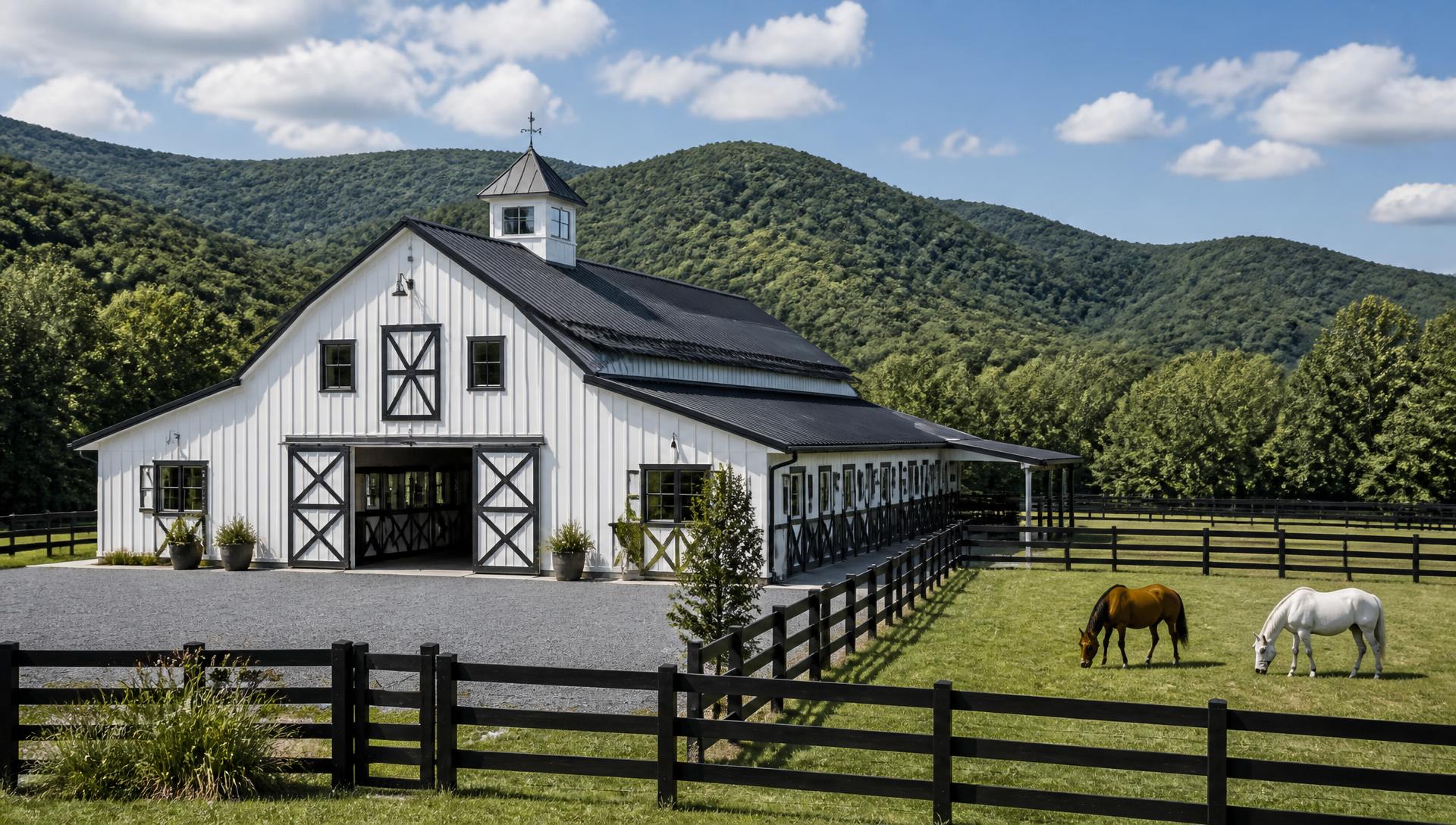
We design barn placement, paddock rotation, and pasture drainage suited to the rolling ground below Yonah Mountain, keeping high-traffic areas well-drained and pasture grazable through wet seasons.
Equestrian
Yonah Mountain Country
Cleveland's rolling foothills below Yonah Mountain have become horse farm and vineyard country, and both uses demand precise grading and drainage work.
Start your property projectWhite
Yonah Mountain rises just outside town, and the granite dome's foothills have drawn a growing mix of vineyards and equestrian properties over the past two decades. Both land uses need the same thing from a site: well-drained, properly graded ground, but they need it configured very differently.
Vineyard sites want south and southeast-facing slopes with controlled drainage that moves water off the rows without eroding them, often on grades between 5 and 15 percent. Horse properties want gentler pasture, all-weather footing near barns, and fence lines that don't fight the terrain.
White County's soil here runs from red clay to rockier ground closer to Yonah's granite base, and we adjust grading and drainage design lot by lot rather than applying a single template across the county.
What makes this market different
Grape vines need drainage that moves water off the row without stripping topsoil from between vines. We design terracing and grassed waterways specific to vineyard row spacing rather than standard residential drainage.
Properties closer to Yonah Mountain often have shallow soil over granite, which affects everything from fence post depth to septic design. We test soil depth early so plans account for it.
Barn aisles, wash racks, and paddock gates turn to mud fast on White County's clay without proper base and drainage. We build these high-traffic areas with geotextile fabric and compacted stone.
Some grading and structure rules differ for land under bona fide agricultural use, including vineyard and horse operations. We help owners understand what documentation supports these exemptions before starting site work.
Featured services
We design barn placement, paddock rotation, and pasture drainage suited to the rolling ground below Yonah Mountain, keeping high-traffic areas well-drained and pasture grazable through wet seasons.
EquestrianWe grade and prep vineyard sites on south-facing slopes with row-specific drainage design, working with growers to set row orientation and spacing before any earthwork begins.
Land DevelopmentFence lines here need to handle both livestock containment and vineyard deer pressure. We build to the specific threat, whether that's high-tensile wire for horses or taller exclusion fencing for vine rows.
Fencing & EntriesWhite County's clay holds water differently than the rockier ground near Yonah Mountain. We design swales and French drains matched to actual soil conditions on each property rather than a blanket approach.
Drainage & ErosionFrom horse barns to small production buildings for vineyard operations, we build pads and foundations sized for real equipment loads, including grading for delivery truck access.
Barns & OutbuildingsLong approach drives through rolling pasture or vineyard rows need a base built for both daily farm traffic and visitor access. We grade for sightlines and drainage together.
Driveways & AccessOn steeper vineyard blocks, we build low retaining terraces that hold soil in place between rows without disrupting root zones, engineered for the specific grade of each block.
Retaining WallsVineyard and farm properties in this area increasingly include outdoor entertaining areas overlooking the vines or pasture. We grade and drain these spaces to handle foot traffic and event use.
Outdoor LivingWe plan the full property, vineyard blocks, pasture, barns, and homesite, as one connected system so drainage, access, and future expansion all work together.
Property PlanningProperty types
South-facing slope properties combining a residence with working vineyard rows and production space.
Pasture properties with barns, paddocks, and riding areas needing all-weather footing and fencing.
Tracts near Yonah Mountain with shallow rocky soil requiring careful site and septic planning.
Combined farm and residential properties seeking agricultural exemption status under White County rules.
Why owners choose us
We walk the land with you, read the topography and water, and separate what the site needs from what it would merely be nice to have.
Access, drainage, building envelopes and structures get planned together, with a phasing order that protects the budget.
Drawn plans for grading, walls, fencing, barns and landscape so every trade builds from the same document.
One crew and one point of contact, working the plan in the sequence that keeps finished work from being torn back out.
We walk the property after the first heavy rain, confirm everything drains and functions, and hand over a maintenance plan.
Featured work
Field notes
The most expensive equestrian mistakes aren't the barn. They're the barn in the wrong place, on ground that stays wet, served by a drive trucks can't turn on.
ReadBuying LandTwo tracts can look identical from the road and cost $200,000 apart to develop. Here's what we look at on a first walk — before anyone signs anything.
ReadOutdoor LivingOn acreage, outdoor living isn't a patio behind the house. It's choosing which part of the property to make habitable — and building the ground under it properly.
ReadQuestions
Answers specific to this market. If yours isn't here, call 678-578-8114.
Growers generally target 5 to 15 percent south or southeast-facing grades for good sun exposure and natural drainage. We survey each site's aspect and slope before recommending row layout.
It varies significantly across even a single property, from several feet of clay in low areas to just inches over bedrock near outcrops. We test multiple points on a site rather than assuming uniform depth.
Bona fide agricultural use can change setback and some structure requirements under White County rules, but it doesn't eliminate grading permit requirements for larger disturbances. We help clients document agricultural use appropriately while still meeting grading standards.
We install geotextile fabric under compacted stone in gate areas, wash racks, and other high-traffic zones, combined with grading that sheds surface water away rather than letting it pool.
Yes, we install taller exclusion fencing, typically 7 to 8 feet, around vineyard blocks where deer pressure is a known issue, distinct from standard livestock fencing.
Vineyard grading involves more precise row-by-row drainage work than a single homesite pad, so costs scale with acreage and slope complexity rather than a flat comparison. We quote based on row count and grade after a site walk.
Site clearing, grading, and drainage installation for a new vineyard block typically takes several weeks depending on acreage and slope, with timing often planned around dormant season for planting.
Barns near granite outcrops may need adjusted footing depth, while those on deeper clay soil need drainage planning to prevent water from undermining the slab. We assess each site individually.
It depends on acreage under irrigation and well yield, which varies across White County's mixed geology. We coordinate with well drillers and sometimes recommend irrigation ponds for larger vineyard or pasture operations.
Treating drainage as an afterthought. Once vines or pasture grass are established, redoing drainage is far more disruptive and costly. We design the full water management plan before any planting or fencing begins.
Start here
Tell us about your Cleveland property. We'll come back with what the site needs, what order to do it in, and what it's likely to cost.