Barn and Arena Site Planning
We design barn and arena placement around Etowah River floodplain boundaries, drainage patterns, and prevailing wind, so the finished facility functions well for horses year-round, not just on dry days.
Equestrian
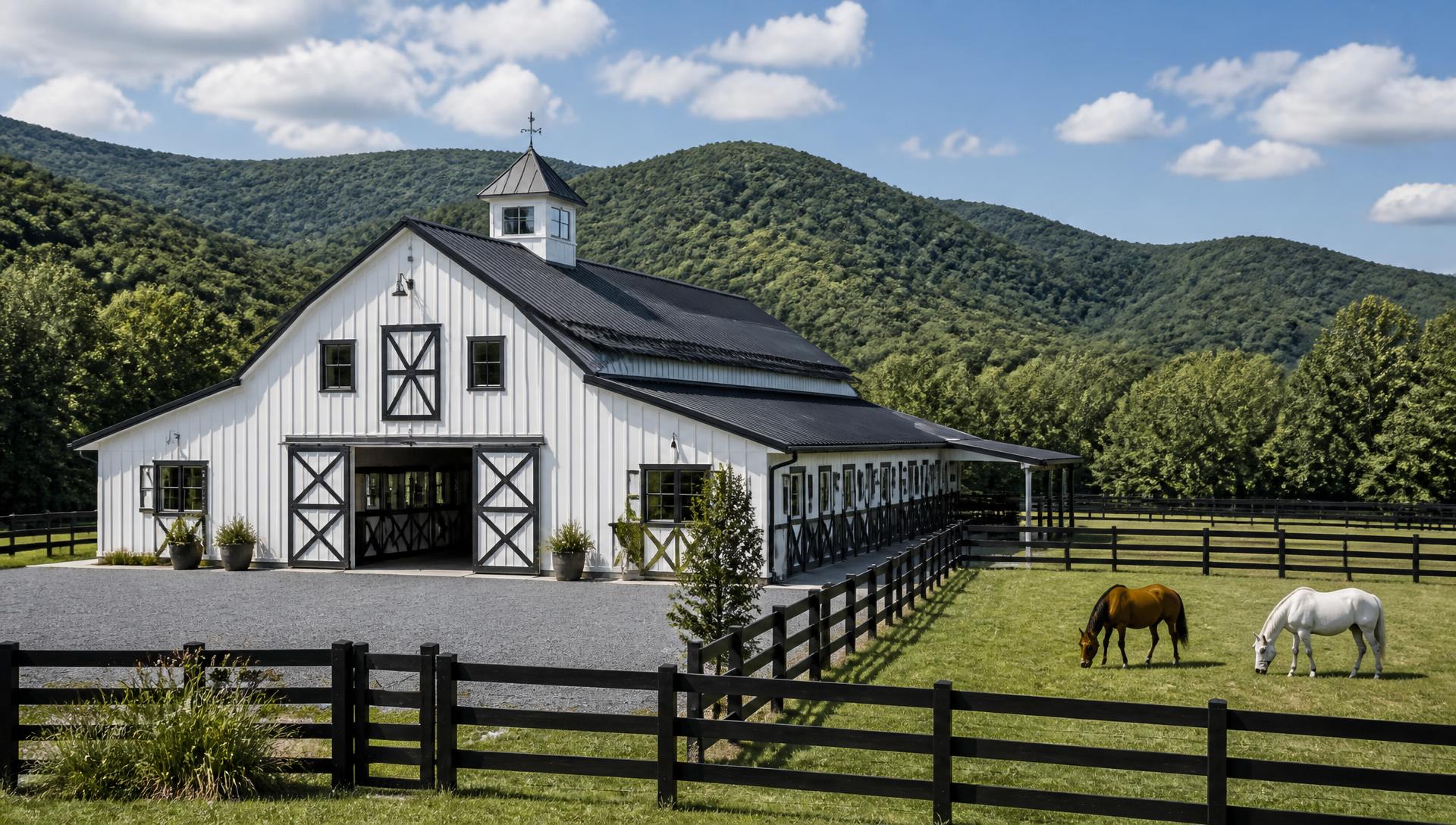
Etowah River Horse Country
Canton's rolling pastureland along the Etowah River has long supported horse farms, and demand for acreage here keeps growing as Cherokee County develops.
Start your property projectCherokee County
Canton sits along the Etowah River, and the flatter bottomland pastures near the water have supported horse farms and small agricultural operations for generations. That equestrian character remains even as Cherokee County's growth pushes new rooftops closer to the city's edges, and buyers are actively seeking five, ten, and twenty-acre tracts here specifically for horses.
The county's zoning still supports agricultural and equine use on larger parcels, but floodplain maps along the Etowah River and its tributaries limit where barns, arenas, and paddocks can sit relative to the water. We factor FEMA flood zone data into every equestrian site plan before laying out a barn or arena.
Beyond horse properties, Canton is also seeing a steady wave of larger residential acreage development as buyers move north from Woodstock and Alpharetta looking for more land at a better price. We work both sides of that market, from working horse farms to new estate-scale residential tracts.
What makes this market different
Bottomland pastures near the Etowah River often fall partially within mapped floodplain, restricting where barns and permanent structures can be sited. We pull FEMA flood maps for every equestrian project before finalizing a layout.
Cherokee County clay combined with horse traffic creates chronic mud problems in paddocks and gate areas. We grade and install footing systems specifically to manage this rather than relying on the horses to wear a path.
Many acreage tracts sit off narrower county roads without existing curb cuts, requiring county approval and proper culvert sizing for new driveway access.
As Canton grows, some agricultural-zoned parcels are being subdivided or rezoned, which changes setback and structure requirements for anyone building a barn or arena on a smaller resulting tract.
Featured services
We design barn and arena placement around Etowah River floodplain boundaries, drainage patterns, and prevailing wind, so the finished facility functions well for horses year-round, not just on dry days.
EquestrianFrom ten-acre horse farms to larger residential tracts, we handle clearing, rough grading, and Cherokee County land disturbance permitting for new development on Canton acreage.
Land DevelopmentWe regrade paddocks and gate areas to move water away from high-traffic zones, cutting down on mud and the hoof health issues that come with it.
Drainage & ErosionWe install and repair pasture fencing built for horses specifically, whether traditional board fence or coated wire, sized and spaced to Cherokee County's typical equine standards.
Fencing & EntriesLong farm driveways connecting to county roads need proper culverts and base material to handle horse trailers and farm equipment without rutting.
Driveways & AccessWe site and build barns, run-in sheds, and equipment storage structures to meet county setback rules while keeping them convenient to pastures and the main residence.
Barns & OutbuildingsCanton's larger properties increasingly pair working farm infrastructure with outdoor living space near the main house, from covered porches to fire pits overlooking the pasture.
Outdoor LivingWhere pastures meet wooded hillside, we install retaining structures to prevent erosion from washing sediment into paddocks below.
Retaining WallsProperty types
Flatter pasture tracts near the river, prized for horses but constrained by floodplain boundaries that limit structure placement.
Established equestrian properties with existing barns and arenas, often in need of drainage upgrades or facility expansion.
Five to twenty-acre tracts being developed for new custom homes as buyers move north from more expensive metro submarkets.
Family-owned parcels with mixed agricultural use, from hay production to small livestock, increasingly facing rezoning pressure.
Why owners choose us
We walk the land with you, read the topography and water, and separate what the site needs from what it would merely be nice to have.
Access, drainage, building envelopes and structures get planned together, with a phasing order that protects the budget.
Drawn plans for grading, walls, fencing, barns and landscape so every trade builds from the same document.
One crew and one point of contact, working the plan in the sequence that keeps finished work from being torn back out.
We walk the property after the first heavy rain, confirm everything drains and functions, and hand over a maintenance plan.
Featured work
Field notes
The most expensive equestrian mistakes aren't the barn. They're the barn in the wrong place, on ground that stays wet, served by a drive trucks can't turn on.
ReadBuying LandTwo tracts can look identical from the road and cost $200,000 apart to develop. Here's what we look at on a first walk — before anyone signs anything.
ReadDrainageIf you're buying three loads of gravel a year, you don't have a gravel problem. You have a water problem, and gravel is the most expensive way to ignore it.
ReadQuestions
Answers specific to this market. If yours isn't here, call 678-578-8114.
It depends on where the FEMA floodplain line falls on your specific parcel. We pull flood maps before recommending barn placement, and in many cases the buildable area sits well back from the water on higher ground.
We commonly work on properties ranging from five to twenty acres, with five to ten acres being a practical minimum for a small horse operation with proper pasture rotation.
We regrade high-traffic areas like gates and run-in shed entries, often adding footing material like gravel or engineered pads, combined with drainage to move water away from where horses congregate.
Yes, though growth pressure means more scrutiny on new agricultural rezoning requests, especially near city limits. We recommend confirming zoning early with the county before purchasing land for equine use.
Board fencing and coated high-tensile wire are both common and effective in this area. The right choice depends on budget, number of horses, and whether you need to contain more active breeds.
Site grading and pad prep for a barn typically takes one to two weeks, with total project time depending on barn size and whether utilities need to be extended to the site.
Cherokee County generally requires permitting for structures over a certain size or with roofs, while open outdoor riding rings may not need a building permit but still require grading and drainage planning.
Floodplain acreage can still be valuable for pasture use even if it's not buildable, since it doesn't prevent grazing. We help buyers understand which portions of a tract are usable for structures versus pasture only.
Buying acreage without checking floodplain maps or existing drainage patterns is the most common issue we see, since it can eliminate the best barn site after purchase. A site evaluation before closing avoids that.
Yes, we coordinate culvert sizing and driveway permits with Cherokee County Public Works for new access points off county-maintained roads.
Nearby areas we serve
Start here
Tell us about your Canton property. We'll come back with what the site needs, what order to do it in, and what it's likely to cost.