Johns Creek developed later and more densely than its neighbors to the west, and its luxury neighborhoods — Country Club of the South, St. Ives, Sugar Mill — were platted with quarter-acre to half-acre lots rather than sprawling acreage. That density means setbacks, easements, and neighboring drainage patterns all constrain what's buildable, and a site plan here has far less margin for adjustment once work begins than a project on raw acreage.
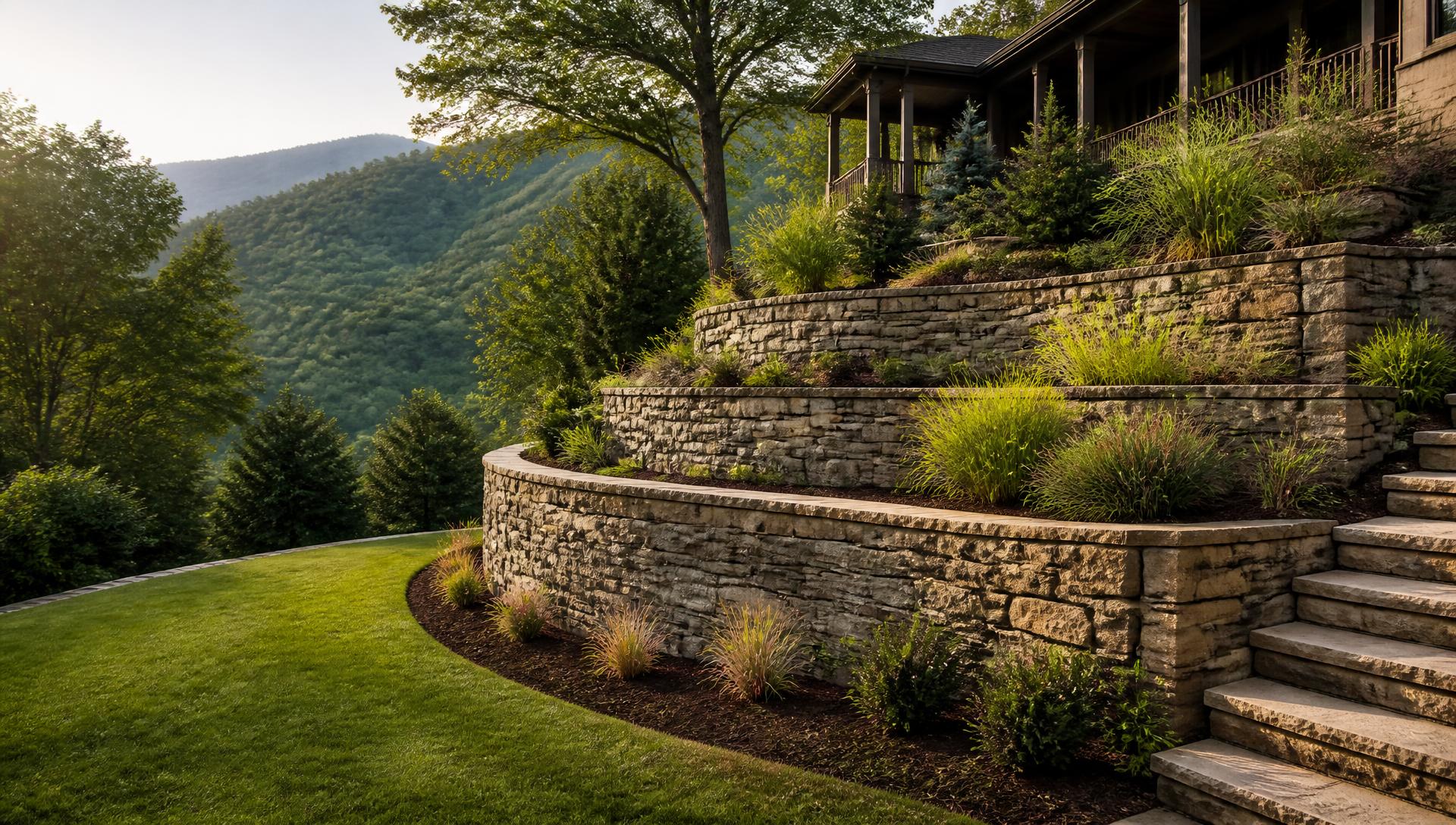
The city sits along the Chattahoochee River on its western edge, with Johns Creek itself and several named tributaries draining the interior. Because lots are smaller and more built-out, stormwater from roofs, driveways, and patios concentrates fast, and older subdivisions weren't always designed to handle the added hardscape homeowners have added since. Retaining walls and precise regrading are often the only way to create meaningful new outdoor space without triggering runoff problems for a neighbor downhill.
Soil across the city runs mostly Georgia red clay with pockets of rockier substrate near the river bluffs, which affects excavation cost for pools and retaining wall footings alike. We do a disproportionate amount of retaining wall and drainage work here compared to raw land clearing, simply because that's what the market's lot sizes and existing development call for.