Drainage retrofits for Roswell's older lots
We redesign drainage on established properties where original grading can't handle a new pool, addition, or hardscape, routing water away from foundations and toward approved outfalls.
Drainage & Erosion
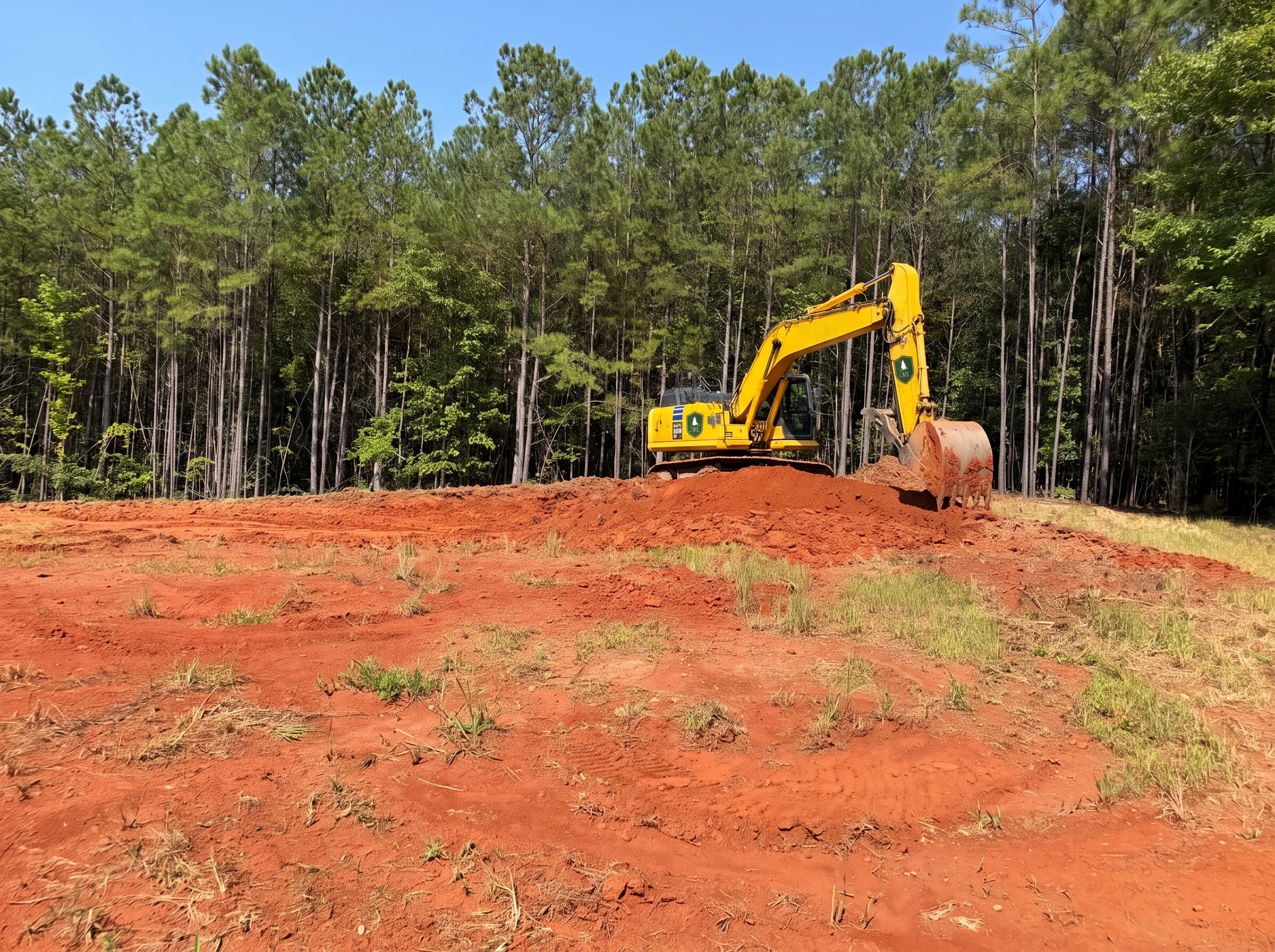
River Corridor Site Work
Roswell's older neighborhoods sit on some of the largest, most established lots in north Fulton, many backing to the Chattahoochee River corridor and its protected floodplain.
Start your property projectFulton County
Roswell was built up decades before most of its neighbors, and it shows in the lot sizes — half-acre to five-acre parcels with mature hardwood canopy are common in neighborhoods like Horseshoe Bend, River Eves, and along Willeo Road. Many of these lots were graded under older standards and now need updated drainage as owners add pools, additions, or outdoor living space that the original grading never accounted for.
The Chattahoochee River corridor runs through the heart of the city, and Georgia's Metropolitan River Protection Act imposes a 2,000-foot corridor with its own vegetation and impervious surface rules on top of standard stream buffers. Any project near the river — from a dock to a driveway extension — needs a corridor review before design work goes far, and that review shapes what's actually buildable on riverfront and near-river lots.
Away from the river, Roswell's terrain rolls through creek drainages like Big Creek and Vickery Creek, with clay soils that hold water on flatter lots and shed it fast on the steeper ones near the Vickery Creek gorge. We see a steady mix of retaining wall work on sloped older lots, drainage retrofits on established properties, and outdoor living additions that require regrading around a decades-old house.
What makes this market different
Property within Roswell's 2,000-foot river corridor faces added vegetation and impervious surface restrictions beyond standard buffers. We factor corridor review into any near-river project timeline.
Many Roswell homes were built before modern stormwater standards. Adding a pool, addition, or hardscape often requires retrofitting drainage the original grading never included.
Lots near the Vickery Creek gorge and historic mill district have significant elevation change, making retaining walls and careful erosion control necessary for any new construction.
Decades-old hardwoods on established lots complicate excavation and grading. We plan cuts and fills to avoid damaging root systems that protect soil stability.
Featured services
We redesign drainage on established properties where original grading can't handle a new pool, addition, or hardscape, routing water away from foundations and toward approved outfalls.
Drainage & ErosionSteep lots near the gorge and riverfront properties often need engineered retaining walls to create usable flat space while keeping grading compliant with corridor rules.
Retaining WallsRoswell's mature neighborhoods see frequent additions and rebuilds. We handle grading, utility coordination, and drainage integration on lots that already have decades of established landscaping.
Land DevelopmentPool terraces and outdoor kitchens on Roswell's older lots require grading around existing trees and drainage patterns, which we plan for before construction rather than working around problems mid-build.
Outdoor LivingMany Roswell driveways were built decades ago on grades that no longer meet modern drainage standards. We rebuild them with proper base, crown, and culverts to stop washouts.
Driveways & AccessEstablished Roswell neighborhoods often have tighter setbacks than newer developments. We install fencing that respects property lines and HOA rules while providing real privacy.
Fencing & EntriesNear-river and gorge-adjacent lots need a coordinated plan across drainage, retaining walls, and outdoor space to satisfy corridor review while still delivering a functional yard.
Property PlanningProperty types
Half-acre to multi-acre lots along or near the Chattahoochee, subject to Metropolitan River Protection Act rules that limit impervious surface and vegetation clearing near the water.
Mature properties in Horseshoe Bend, River Eves, and similar neighborhoods with decades-old grading that often needs updating for new construction or additions.
Steeper parcels near the historic mill district and creek gorge, where retaining walls and erosion control are typically necessary for any significant site work.
Smaller lots being redeveloped with new construction, requiring careful grading to work around mature trees and existing neighborhood drainage patterns.
Why owners choose us
We walk the land with you, read the topography and water, and separate what the site needs from what it would merely be nice to have.
Access, drainage, building envelopes and structures get planned together, with a phasing order that protects the budget.
Drawn plans for grading, walls, fencing, barns and landscape so every trade builds from the same document.
One crew and one point of contact, working the plan in the sequence that keeps finished work from being torn back out.
We walk the property after the first heavy rain, confirm everything drains and functions, and hand over a maintenance plan.
Featured work
Field notes
A leaning wall is almost never a block problem. It's water pressure behind a wall that had nowhere to drain — and it was decided the day the base was cut.
ReadDrainageIf you're buying three loads of gravel a year, you don't have a gravel problem. You have a water problem, and gravel is the most expensive way to ignore it.
ReadOutdoor LivingOn acreage, outdoor living isn't a patio behind the house. It's choosing which part of the property to make habitable — and building the ground under it properly.
ReadQuestions
Answers specific to this market. If yours isn't here, call 678-578-8114.
It's a state law establishing a 2,000-foot corridor along the Chattahoochee River with added restrictions on vegetation removal and impervious surfaces. If your property falls within that corridor, any grading, driveway, or structure work needs additional review before permits are issued.
Many established lots were graded to standards from decades ago, before current stormwater detention requirements existed. Adding hardscape or structures without updating drainage often overwhelms the original grading, which is why retrofits are common here.
It depends on your exact distance from the river and whether the project falls inside the protected corridor. We coordinate with the appropriate review board early so the project isn't redesigned mid-permit.
We engineer wall height, drainage backfill, and footing depth to the specific slope and soil conditions, since undersized walls near the creek gorge fail within a few years. Taller walls typically require a permit and engineered plans.
Beyond excavation, we typically need to redesign drainage around the pool equipment pad and regrade the surrounding yard so runoff doesn't pool against the house or neighboring property. Tree roots and utility lines often factor into the layout too.
Roswell's tree preservation rules protect certain specimen trees, and practically speaking, root systems on decades-old hardwoods limit how close excavation can safely happen. We map root zones before finalizing a grading plan.
A single-area fix like a French drain or regraded swale can take a few days. Whole-lot drainage redesigns tied to a larger addition or pool project usually run two to four weeks depending on scope.
It varies by neighborhood — flatter areas away from the river tend toward the same compacted clay found across the region, while lots closer to the Chattahoochee and its creeks often have sandier, more erodible soil that needs different erosion control.
Driveway work usually requires a right-of-way permit if it connects to a public street, plus stormwater review if it significantly changes impervious surface on the lot. We handle the permitting as part of the project scope.
Nearby areas we serve
Start here
Tell us about your Roswell property. We'll come back with what the site needs, what order to do it in, and what it's likely to cost.