Equestrian site work in Milton
Barns, arenas, cross-fencing, and paddock drainage for Milton's working horse farms. We understand AG-1 setback rules and grade pastures to shed water without turning to mud in wet months.
Equestrian
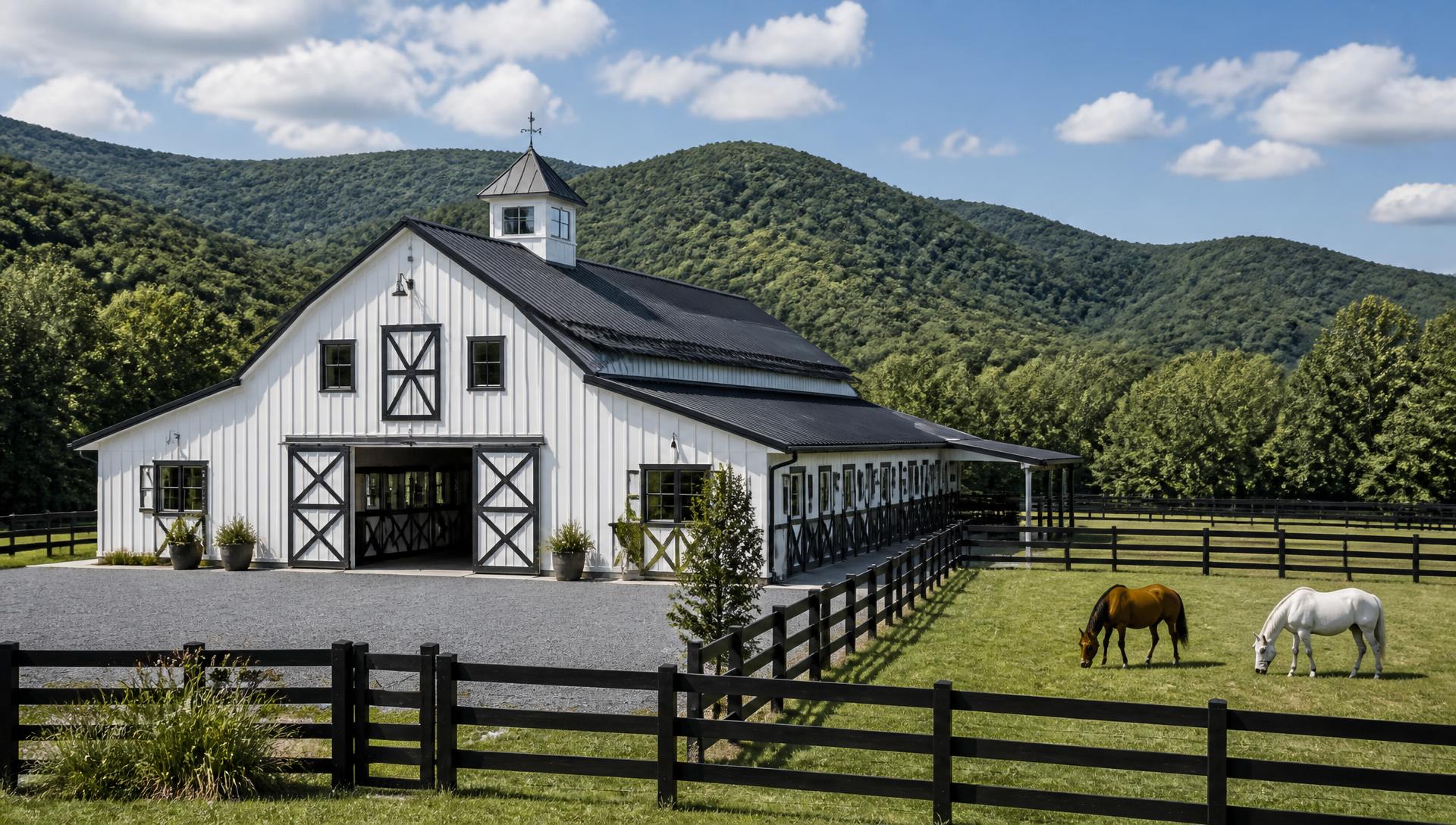
Our Home Market
Milton is where John Franklin Land Group started, and it's still the market we know best — its AG-1 farms, horse properties, and rolling pastures along Birmingham Highway and Freemanville Road.
Start your property projectFulton County
Milton was incorporated specifically to protect its rural, equestrian character, and its zoning code reflects that. Much of the city sits under AG-1 zoning, which favors large lots, working farms, and horse properties over dense residential subdivision. That protection is why Milton still has functioning cattle pastures and boarding barns within a twenty-minute drive of Atlanta's northern suburbs, and it's why every site plan here has to respect minimum lot sizes and setback rules that don't apply in neighboring cities.
The land itself rolls steadily from the Birmingham Highway ridge down toward the Little River watershed, with pastures giving way to hardwood bottoms along the creeks. Soils vary block to block — some parcels have workable sandy loam near the river, others sit on the same compacted red clay found across north Fulton. Grading a barn pad, an arena, or a driveway on this ground means testing before designing, not assuming one soil profile fits the whole property.
This is where equestrian work is our bread and butter. We build barns, arenas, cross-fencing, and all-weather driveways for working horse farms, and we grade and drain pastures so they don't turn to mud every winter. We also handle the estate side of Milton — large residential lots off Freemanville and Hopewell that want privacy fencing, pool terraces, and long gravel drives through mature woods.
What makes this market different
Milton's agricultural zoning sets minimum lot sizes and use restrictions that affect where structures, driveways, and fencing can go. We confirm zoning compliance before any grading starts.
Clay soils and heavy horse traffic turn poorly graded pastures into standing mud by winter. We grade paddocks and install French drains to keep footing usable year-round.
Properties near the Little River and its tributaries carry state buffer restrictions that limit clearing and construction near the water, shaping barn and arena placement.
Many Milton properties sit far off the road on gravel or dirt lanes that wash out under horse trailers and heavy equipment. We build these with proper base, crown, and culverts from the start.
Featured services
Barns, arenas, cross-fencing, and paddock drainage for Milton's working horse farms. We understand AG-1 setback rules and grade pastures to shed water without turning to mud in wet months.
EquestrianFrom boarding barns to run-in sheds, we site outbuildings to meet Milton's agricultural zoning setbacks while keeping access easy for trailers, feed delivery, and daily chores.
Barns & OutbuildingsBoard fencing, wire cross-fencing, and privacy fencing built to hold livestock and define property lines across Milton's rolling pastures and wooded estate lots alike.
Fencing & EntriesLong gravel and paved drives that hold up under trailers and delivery trucks, with proper crown, base depth, and culverts sized for Milton's rainfall and clay soil.
Driveways & AccessWe grade paddocks, install French drains, and manage runoff on properties near the Little River watershed, keeping buffers intact while solving standing water and erosion.
Drainage & ErosionWe plan and build out entire parcels — driveway, barn, fencing, pasture, and home site — sequenced to Milton's AG-1 permitting process and typical multi-acre lot layouts.
Land DevelopmentPool terraces, fire pits, and covered porches sited to take advantage of pasture and woodland views common on Milton's larger residential parcels.
Outdoor LivingWhere rolling terrain needs a flat pad for an arena, home, or driveway, we build retaining walls that handle Milton's clay soil and seasonal water without failing.
Retaining WallsWe lay out barns, arenas, pastures, and residences together so traffic flow, drainage, and zoning all work as one plan instead of a series of disconnected projects.
Property PlanningProperty types
AG-1 zoned properties with boarding barns, arenas, and cross-fenced pastures, typically five to fifty acres along Birmingham Highway, Freemanville Road, and Hickory Flat.
Large wooded and pastured home sites, often two to ten acres, with long private drives and demand for pools, fencing, and outdoor living space.
Smaller working farms raising cattle, hay, or specialty crops, needing driveway access, drainage, and fencing sized for equipment rather than horse trailers.
Parcels bordering the Little River watershed with meaningful buffer restrictions, where barn, pasture, and home placement all have to respect protected zones.
Why owners choose us
We walk the land with you, read the topography and water, and separate what the site needs from what it would merely be nice to have.
Access, drainage, building envelopes and structures get planned together, with a phasing order that protects the budget.
Drawn plans for grading, walls, fencing, barns and landscape so every trade builds from the same document.
One crew and one point of contact, working the plan in the sequence that keeps finished work from being torn back out.
We walk the property after the first heavy rain, confirm everything drains and functions, and hand over a maintenance plan.
Featured work
Field notes
The most expensive equestrian mistakes aren't the barn. They're the barn in the wrong place, on ground that stays wet, served by a drive trucks can't turn on.
ReadBuying LandTwo tracts can look identical from the road and cost $200,000 apart to develop. Here's what we look at on a first walk — before anyone signs anything.
ReadDrainageIf you're buying three loads of gravel a year, you don't have a gravel problem. You have a water problem, and gravel is the most expensive way to ignore it.
ReadQuestions
Answers specific to this market. If yours isn't here, call 678-578-8114.
AG-1 sets minimum lot sizes and favors agricultural and low-density residential use over subdivision. It affects how many structures you can build and where, which is why we confirm zoning details with Milton's planning department before designing a site plan.
Most working farms here run five to twenty acres, though smaller lots can support one or two horses with a well-managed paddock. The right number depends on pasture rotation, drainage, and how much of the land is usable versus wooded or buffered.
Compacted clay soil combined with concentrated horse traffic near gates and shelters sheds water poorly. Regrading high-traffic areas and adding French drains or footing material usually solves it, but the fix depends on the specific drainage pattern of the pasture.
It depends on the buffer distance required by state and local rules, which is typically measured from the top of the stream bank. We survey the buffer before finalizing barn or arena placement to avoid a costly redesign.
Most working farm driveways need at least twelve feet of clear width with wider turning radii at gates and barns. We size the base and drainage to handle repeated trailer and delivery truck weight, not just passenger vehicles.
Wood board fencing remains the standard for durability and appearance, though many farms pair it with electric wire on the inside to reduce chewing and leaning. The right choice depends on herd size, budget, and maintenance preference.
Outdoor arenas typically need grading and drainage review even without a structure permit, especially if they affect runoff onto neighboring property. We confirm requirements with Fulton County and Milton's planning office before starting earthwork.
Proper subgrade compaction, a geotextile fabric layer, and the right footing material over a crowned base are what keep an arena draining correctly. Skipping the base work is the most common reason arenas fail within a year or two.
A driveway, barn, and fenced pasture package often takes six to twelve weeks depending on weather, permitting, and site conditions. Larger projects with arenas or multiple structures can extend beyond that.
Available raw acreage in Milton has become scarce as the city has grown, which keeps land values firm. Buyers should verify AG-1 zoning compliance, buffer restrictions, and soil conditions before closing, since those factors drive real development cost.
Nearby areas we serve
Start here
Tell us about your Milton property. We'll come back with what the site needs, what order to do it in, and what it's likely to cost.