Large Tract Clearing and Grading
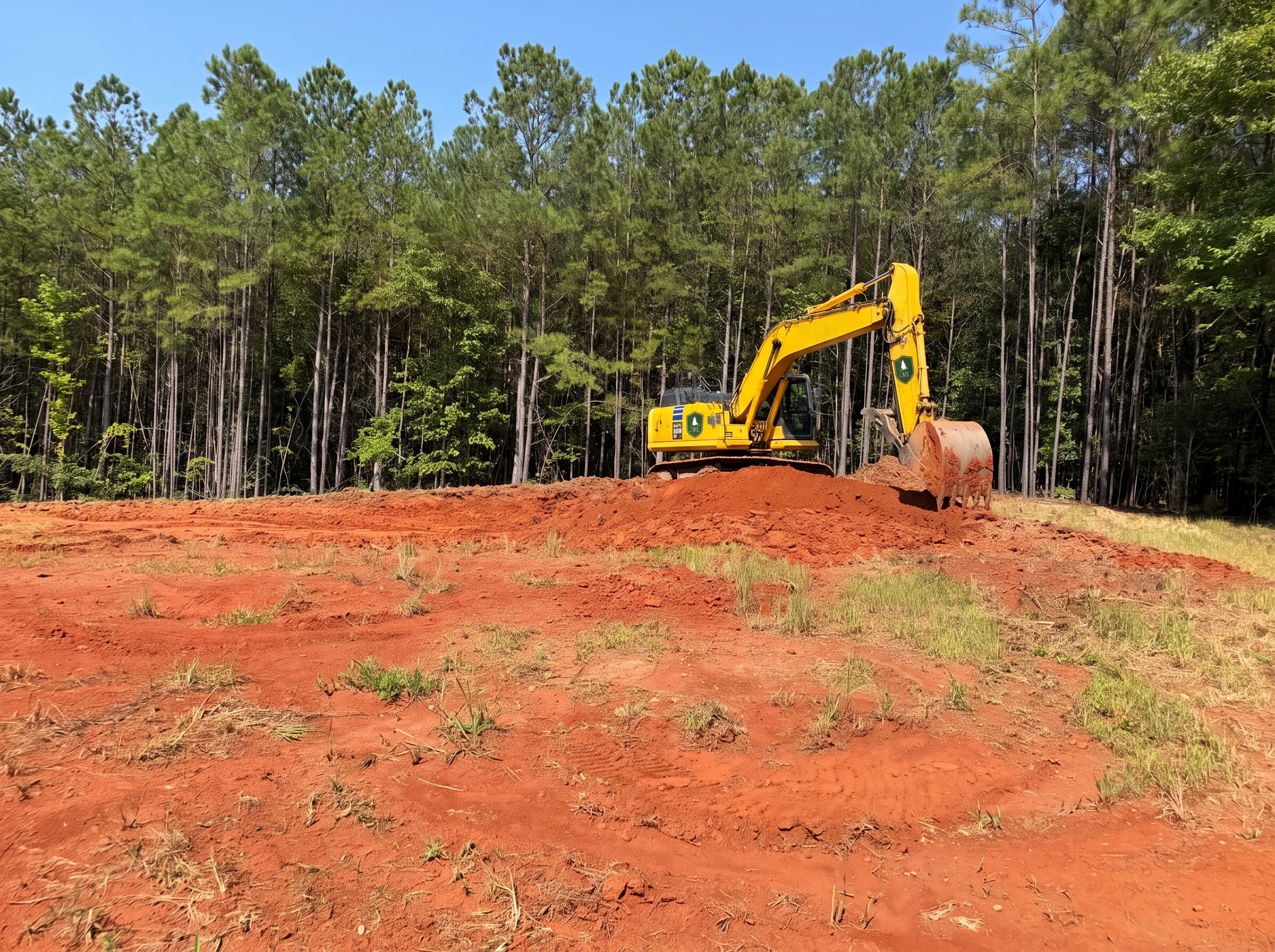
We clear and grade pasture, crop ground, and building sites across ranch-scale properties, sequencing work to minimize disruption to active grazing or farming operations already underway.
Land Development
Etowah Valley Ranch Country
Cartersville anchors a working ranch and agricultural economy across the Etowah River valley, and the land here is measured in dozens, not fractions, of acres.
Start your property projectBartow County
Cartersville and the surrounding Bartow County countryside sit in the broad Etowah River valley, where flatter, fertile bottomland has supported cattle operations and row crop agriculture for well over a century. The scale here is different from the smaller acreage tracts closer to metro Atlanta: fifty, one hundred, and even several-hundred-acre ranches are common, not the exception.
That scale changes how we approach nearly every project. Fencing a rotational grazing system across two hundred acres requires different planning than a suburban paddock, and pond work on a working cattle operation has to account for herd access and water quality, not just aesthetics. Bartow County's agricultural exemption programs also shape how landowners want structures and clearing handled to preserve tax status.
We also see growing interest from buyers looking to convert larger Cartersville-area tracts into equestrian or gentleman-farm use, drawn by the acreage-per-dollar value compared to Cherokee or Forsyth County. Whether the goal is a working cattle ranch or a private estate on former farmland, the underlying groundwork, drainage, access roads, and fencing, is the foundation everything else is built on.
What makes this market different
Fencing hundreds of acres for rotational cattle grazing requires material staging, terrain mapping, and phased installation that small-property fencing crews aren't equipped to handle. We plan these projects in sections tied to grazing rotation needs.
Many Bartow County ranch properties carry a conservation use or agricultural exemption that limits how much land can be developed or cleared without affecting tax status. We coordinate clearing plans with what the exemption allows.
The most fertile pasture and cropland often sits closest to the Etowah River and its floodplain, which restricts permanent structure placement even though the ground itself is prime grazing or crop land.
Ranch operations need interior farm roads that hold up to tractors, hay equipment, and cattle trailers year-round, which requires a heavier base than a typical residential driveway.
Featured services
We clear and grade pasture, crop ground, and building sites across ranch-scale properties, sequencing work to minimize disruption to active grazing or farming operations already underway.
Land DevelopmentWe design and install multi-paddock fencing systems for cattle operations, planning water access and gate placement around how the herd actually moves across the land.
Fencing & EntriesCattle operations need reliable stock ponds. We evaluate watershed size and soil conditions to size ponds correctly and manage erosion around banks used for daily herd access.
Drainage & ErosionWe build heavy-duty farm roads with proper base material and culverts sized for tractors, hay trucks, and livestock trailers operating in all weather conditions.
Driveways & AccessWe site and build large hay storage barns and equipment structures positioned for efficient access from fields while meeting Bartow County agricultural building requirements.
Barns & OutbuildingsFor buyers converting former cattle or crop ground into equestrian use, we redesign fencing, footing, and barn placement to suit horses rather than cattle.
EquestrianWhen a ranch property includes a new estate home, we site the homesite to preserve the best agricultural ground while still getting the drainage and grade right for construction.
Property PlanningRanch homeowners often want outdoor living space that takes in pasture and river valley views. We design these spaces to work with the working landscape around them, not against it.
Outdoor LivingProperty types
Fifty to several-hundred-acre operations with active grazing, requiring large-scale fencing, pond, and farm road infrastructure.
Fertile flood-valley cropland and pasture near the river, constrained by floodplain rules for permanent structures.
Properties enrolled in Georgia's conservation use tax program, which limits development to preserve favorable tax assessment.
Larger tracts being converted from active row-crop or cattle use into estate residential or equestrian properties.
Why owners choose us
We walk the land with you, read the topography and water, and separate what the site needs from what it would merely be nice to have.
Access, drainage, building envelopes and structures get planned together, with a phasing order that protects the budget.
Drawn plans for grading, walls, fencing, barns and landscape so every trade builds from the same document.
One crew and one point of contact, working the plan in the sequence that keeps finished work from being torn back out.
We walk the property after the first heavy rain, confirm everything drains and functions, and hand over a maintenance plan.
Featured work
Field notes
The most expensive equestrian mistakes aren't the barn. They're the barn in the wrong place, on ground that stays wet, served by a drive trucks can't turn on.
ReadBuying LandTwo tracts can look identical from the road and cost $200,000 apart to develop. Here's what we look at on a first walk — before anyone signs anything.
ReadStructuresA leaning wall is almost never a block problem. It's water pressure behind a wall that had nowhere to drain — and it was decided the day the base was cut.
ReadQuestions
Answers specific to this market. If yours isn't here, call 678-578-8114.
We regularly work on properties from fifty to several hundred acres, though the scope and sequencing of work adjusts significantly based on total acreage and current land use.
Georgia's conservation use assessment requires the land to stay in a qualifying use, so clearing beyond what's necessary for agricultural operations can jeopardize that tax status. We plan clearing scope around what the exemption allows before starting work.
It depends on the FEMA floodplain boundary for your specific parcel. Bottomland close to the river is often excellent pasture or crop ground but restricted for permanent structures, so we plan homesites and barns on higher ground when possible.
A multi-paddock system across a hundred-plus acres typically takes several weeks to a few months depending on terrain, number of paddocks, and material lead times, and we often phase installation around active grazing needs.
We evaluate the watershed feeding the pond site, soil suitability for holding water, and how the herd will access it daily, then size and grade the pond and dam accordingly, often with state approval required for larger structures.
Yes, this is common as ownership changes. It typically involves upgrading fencing to horse-safe materials, adjusting pasture rotation for equine grazing needs, and reworking barn interiors for stalls rather than open cattle housing.
Interior farm roads generally don't require the same permitting as public road access, but any new connection to a county road does require approval and proper culvert sizing through Bartow County Public Works.
We typically use a compacted crusher-run stone base for farm roads carrying tractors and livestock trailers, which handles heavier loads and wet conditions better than gravel alone.
Generally yes, particularly for larger acreage, which is part of why we're seeing more buyers move here specifically for ranch-scale or gentleman-farm properties compared to the metro-adjacent counties.
We sequence our work around planting, grazing, and harvest schedules whenever possible, coordinating directly with the landowner or operator to avoid disrupting an active agricultural operation.
Yes, this is a common priority for ranch owners. We typically look for marginal or wooded ground on higher elevation for the homesite, preserving the best bottomland pasture or crop acreage for continued agricultural use.
Nearby areas we serve
Start here
Tell us about your Cartersville property. We'll come back with what the site needs, what order to do it in, and what it's likely to cost.