
Site work
Building Pad Preparation in North Georgia
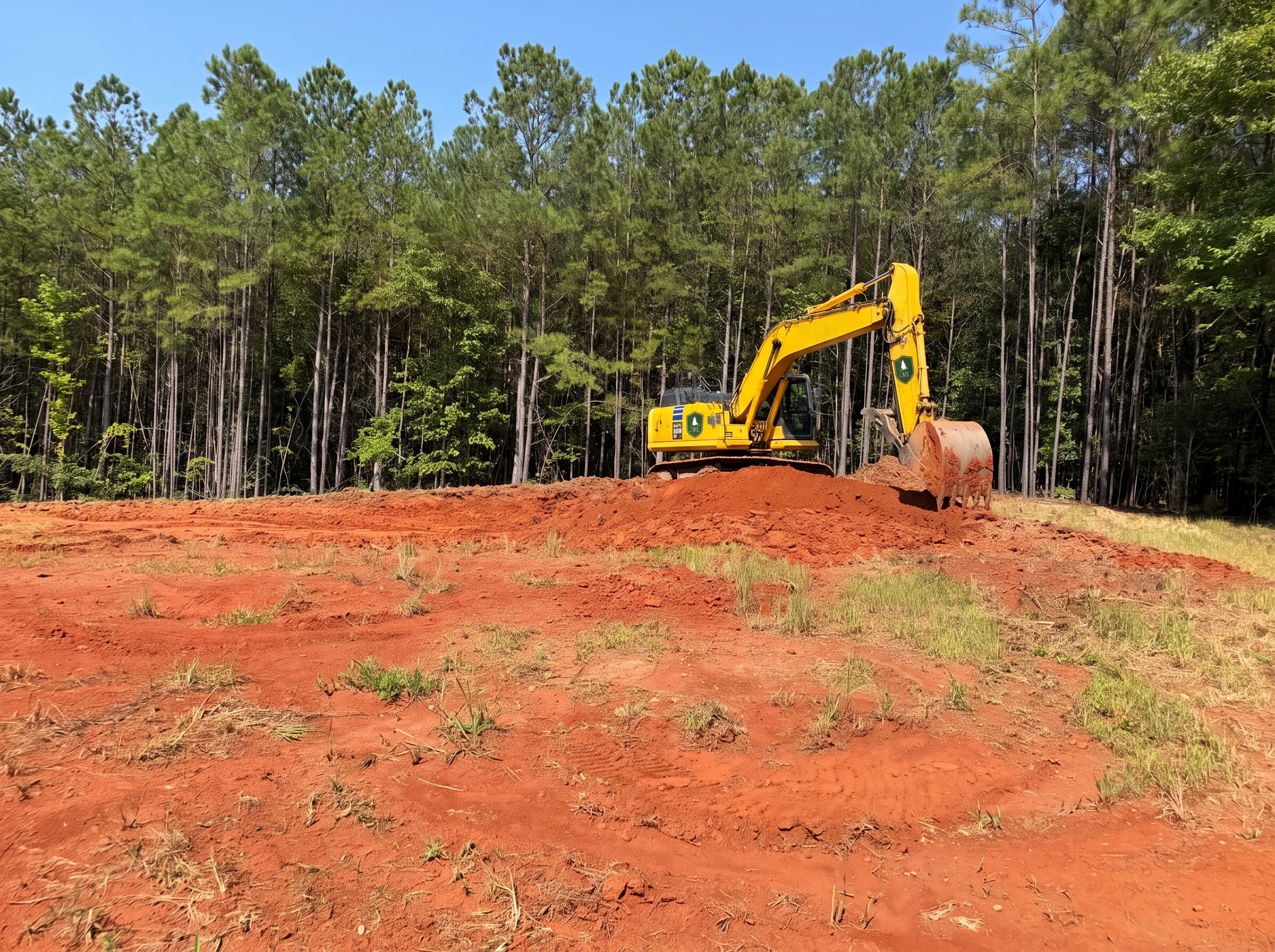
Engineered, compacted building pads for homes, barns and shops — sited, drained and proof-rolled before the slab is poured.
A building pad is a structural element even though nobody ever looks at it. Where it sits decides your drainage and your views; how it is built decides whether the slab cracks. We handle siting, cut, engineered fill, compaction and perimeter drainage so your builder starts on ready ground.
Part of our Land Development & Site Work in North Georgia work across North Georgia.
What we see most often
- Pads placed at the low point because it was the easiest ground to work
- Fill dumped and tracked instead of placed in compacted lifts
- No perimeter drainage, so the pad holds water against the foundation
- Pad too small for equipment access during construction
Scope of work
What this work includes
Siting & orientation
Placement chosen around drainage, prevailing weather, driveway approach, views and future phases of the property.
Engineered fill & compaction
Structural fill placed in lifts and compacted to the density your foundation design requires.
Oversizing for construction
Working room around the footprint so concrete trucks, cranes and lumber deliveries are not fighting the pad.
Perimeter drainage
Interceptor swales, footing drain provisions and finished grades that move water off the pad in every direction.
A dry, compacted, correctly sited pad your builder can start on the week it is finished.
How it goes
Our process
- Step 01
Locate
Stake the footprint against topography, drainage and access.
- Step 02
Strip & cut
Remove topsoil and organics, cut to competent subgrade.
- Step 03
Build up
Place and compact structural fill in controlled lifts.
- Step 04
Prove it
Verify grade and density, then drain the perimeter.
Common questions
Building Pads questions we get
- How thick should a building pad be?
- There is no single answer — it depends on how much cut the site allows, the soil you reach, and the foundation design. What matters more than thickness is that organics are removed, subgrade is competent, and fill is compacted in lifts rather than dumped.
- How long should a pad sit before building?
- A properly compacted pad does not need a waiting period. Pads built from uncompacted fill do, and even then settlement is unpredictable, which is why we compact as the pad is built.
- Do you work with my builder or engineer?
- Yes, and it saves money. When we get foundation elevations and loading early, we can balance the cut on site instead of hauling material and revisiting grade later.
- Can a pad fix a wet building site?
- Raising a structure out of a wet area helps, but only if the water is also given somewhere to go. We pair pads with interceptor drainage rather than relying on elevation alone.
Where we work
Land Development across North Georgia
We handle land development for property owners across the north side of Atlanta — Cumming, Milton, Alpharetta, Roswell, Buckhead, Sandy Springs, Marietta, Woodstock, Canton and Ball Ground — and up through Jasper, Ellijay and Blue Ridge. Choose your area for local conditions, permitting and recent work nearby.
- Land Development in CummingForsyth County
- Land Development in MiltonFulton County
- Land Development in AlpharettaFulton County
- Land Development in RoswellFulton County
- Land Development in WoodstockCherokee County
- Land Development in CantonCherokee County
- Land Development in Ball GroundCherokee County
- Land Development in JasperPickens County
- Land Development in EllijayGilmer County
- Land Development in Blue RidgeFannin County
- Land Development in DawsonvilleDawson County
- Land Development in CartersvilleBartow County
- Land Development in DahlonegaLumpkin County
- Land Development in BlairsvilleUnion County
- Land Development in ClevelandWhite County
- Land Development in GainesvilleHall County
Regional overviews: Land Development in North Georgia, Land Development in Atlanta Metro, Land Development in North Georgia Mountains, Land Development in North Atlanta.
Also serving Johns Creek, Buckhead, Sandy Springs, Marietta, East Cobb, Helen.
Related work
Land Clearing
Selective land clearing, brush mulching, stump grinding and lot clearing for acreage in Cherokee, Forsyth, Dawson and Pickens County.
ViewSite Grading
Rough and finish grading, cut-and-fill balancing and compacted subgrade for homesites, barns and pastures on North Georgia acreage.
ViewPasture Restoration
Pasture renovation, grading, topsoil placement, liming and fescue seeding for horse and cattle farms across North Georgia.
ViewStart here
Tell us about your property
Send the basics and we'll come back with a straight answer on what your site needs, what order to do it in, and what it's likely to cost.