
Marietta, Georgia
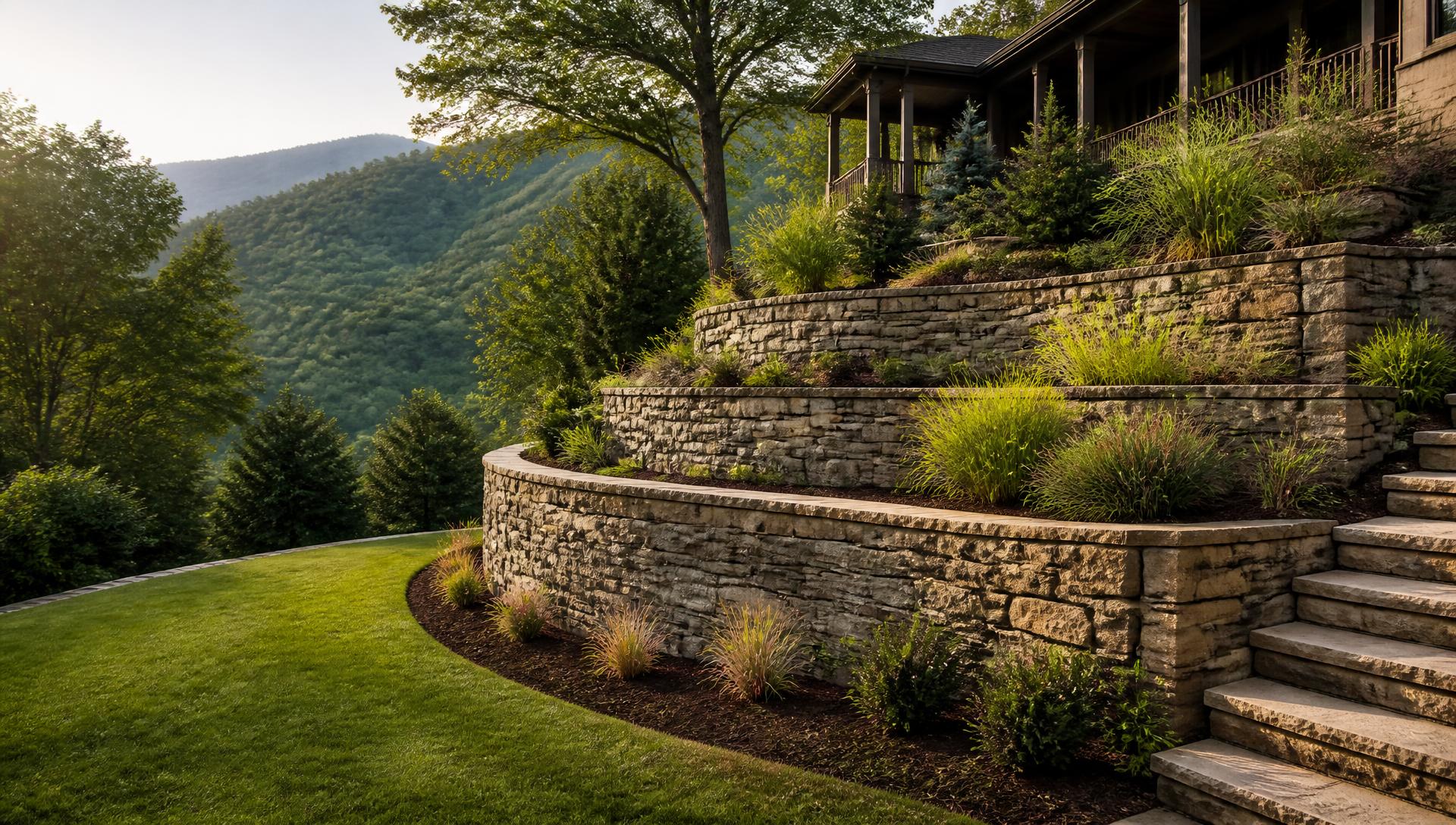
Retaining Walls in Marietta, Georgia
Marietta's rolling terrain near Kennesaw Mountain and the river bluffs calls for engineered retaining walls, not stacked block. We design walls rated for the loads and drainage conditions of each specific slope.
Start your property projectRetaining Walls & Slope Grading in North Georgia
Retaining Walls for Sloped Lots
Marietta is a county seat with a split personality: dense, established neighborhoods around the historic square and Marietta Square, and larger wooded parcels pushing north toward Kennesaw Mountain National Battlefield Park and west toward the Chattahoochee River. Both markets bring their own grading and access questions before a design ever gets drawn.
Most failed walls in this region didn't fail structurally — they failed because water had nowhere to go. Every wall we build is a drainage system first and a stone feature second.
Full Retaining Walls serviceWhat we see locally
- Existing walls leaning, bulging or shedding stone
- Steep ground that leaves no flat, usable yard
- Erosion cutting behind and beneath wall footings
- Terraces that trap water against the house
Scope of work
How the work runs on a Marietta property
Natural stone & boulder walls
Locally sourced stone set for the look of the property, from rustic boulder tiers to tight-fit dry-stack.
Engineered segmental walls
Block systems with geogrid reinforcement where wall height and surcharge loads call for it.
Drainage & base
Compacted base, clean drainage stone, filter fabric and perforated pipe daylighted somewhere useful.
Terracing & steps
Multi-tier layouts, stone steps and planting shelves that turn an unusable slope into level, livable ground.
Flat, usable space where there was a bank — built to stand without maintenance.
Local conditions
What Marietta land does differently
StructuresRetaining Walls That Last: What Holds the Hill UpChattahoochee River buffers
Properties near the Chattahoochee National Recreation Area boundary fall under state and county stream buffer rules that limit clearing and grading near the water. We map buffer lines early so site plans don't require rework later.
Clay soil drainage
Cobb County's dense red clay sheds water fast and erodes on any exposed slope. We design swales, French drains, and terracing that account for clay compaction rather than fighting it after the fact.
Mature tree preservation
Marietta's tree ordinance protects specimen trees on many lots, especially in older neighborhoods. We plan access roads and grading to save qualifying trees and avoid fines or replanting mandates.
Older infrastructure tie-ins
Many Marietta lots sit on septic systems or older utility lines installed decades ago. We verify existing infrastructure before any driveway or foundation work begins so we're not cutting into something undocumented.
Questions
Marietta FAQs
Do I need a permit to regrade my Marietta property?
Cobb County requires a land disturbance permit for most grading projects over a certain threshold, and any work near a stream buffer triggers additional review. We handle the application and plan review process as part of our scope.
How does Marietta's tree ordinance affect my project?
The city and county both protect specimen and heritage trees above a certain diameter. We survey protected trees before design and adjust driveway or structure placement to avoid removal fees and mandatory replanting.
Why does my backyard flood after storms?
Cobb County's red clay compacts and sheds water instead of absorbing it, so poorly graded lots pool water fast. We typically fix this with regrading, French drains, or a combination of swales and dry creek beds depending on the slope.
Can you work near the Chattahoochee River buffer?
Yes, but any work within the state-mandated buffer requires careful setback compliance and often coordination with the county. We map the buffer line first and design around it rather than requesting variances.
What does a retaining wall project typically involve here?
Most Marietta retaining walls require engineered drainage behind the wall, not just block and gravel, because of how the clay holds water. We design wall height, batter, and drainage together, then pull permits where required.
How long does a driveway regrading project take?
A straightforward driveway regrade with new base and drainage typically runs two to four weeks depending on length and slope, though longer wooded driveways with significant grade change take more time.
Keep exploring
Start here
Start your property project
Send us the property details and we'll tell you what retaining walls work your site in Marietta actually needs.