
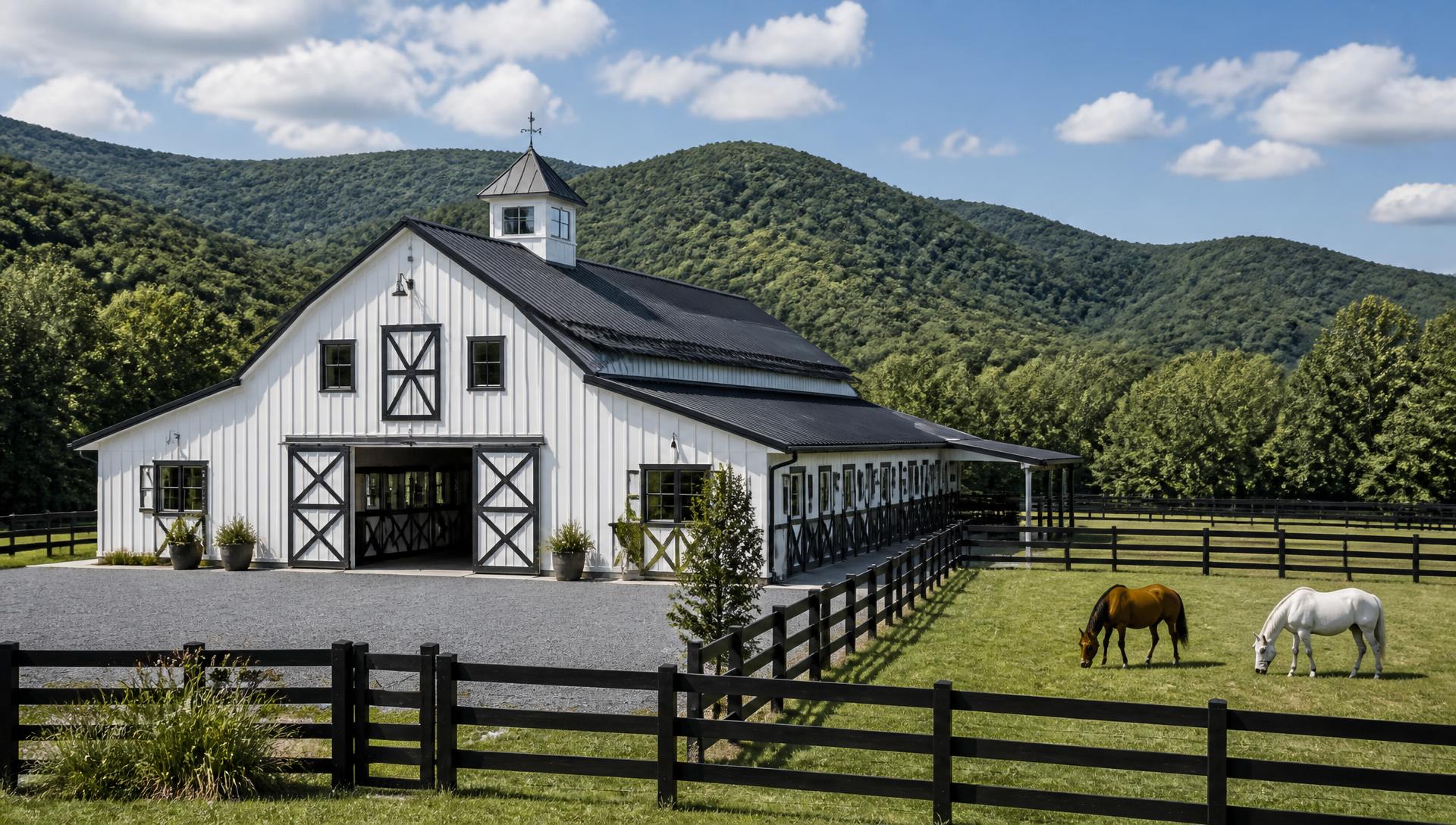
Milton, Georgia
Equestrian in Milton, Georgia
Barns, arenas, cross-fencing, and paddock drainage for Milton's working horse farms. We understand AG-1 setback rules and grade pastures to shed water without turning to mud in wet months.
Start your property projectEquestrian Property Development in North Georgia
Equestrian site work in Milton
Milton was incorporated specifically to protect its rural, equestrian character, and its zoning code reflects that. Much of the city sits under AG-1 zoning, which favors large lots, working farms, and horse properties over dense residential subdivision. That protection is why Milton still has functioning cattle pastures and boarding barns within a twenty-minute drive of Atlanta's northern suburbs, and it's why every site plan here has to respect minimum lot sizes and setback rules that don't apply in neighboring cities.
A horse property is a workflow before it is a build. Where you park the trailer, how far you walk with a wheelbarrow, whether the gate opens uphill in mud — those decisions get locked in the day the barn pad is cut. We lay out the whole operation first.
Full Equestrian serviceWhat we see locally
- Barns placed for the view instead of for daily chores and drainage
- Paddocks that turn to mud at every gate and water trough
- Arenas built on ground that never fully drains
- No safe route for trailers, hay deliveries or the farrier
Scope of work
How the work runs on a Milton property
Whole-farm layout
Barn, paddocks, turnout, arena, hay storage, manure management and trailer access mapped as one circulation plan.
Barn & arena site work
Compacted pads, base preparation, perimeter drainage and finished grades built for the footing and structure you've chosen.
Paddock & gate drainage
High-traffic pads, geotextile and stone at gates and troughs, and surface grading that keeps turnout usable through winter.
Fencing & cross-fencing
Board, no-climb, pipe and electric layouts with rotation in mind — straight lines, square corners, gates where you actually walk.
A farm that is quicker to work every single morning, and dry enough to use in February.
Local conditions
What Milton land does differently
EquestrianPlanning a Horse Property: Barns, Fencing, Access and Drainage TogetherAG-1 zoning and lot minimums
Milton's agricultural zoning sets minimum lot sizes and use restrictions that affect where structures, driveways, and fencing can go. We confirm zoning compliance before any grading starts.
Pasture drainage and mud management
Clay soils and heavy horse traffic turn poorly graded pastures into standing mud by winter. We grade paddocks and install French drains to keep footing usable year-round.
Little River watershed buffers
Properties near the Little River and its tributaries carry state buffer restrictions that limit clearing and construction near the water, shaping barn and arena placement.
Long, unpaved driveway maintenance
Many Milton properties sit far off the road on gravel or dirt lanes that wash out under horse trailers and heavy equipment. We build these with proper base, crown, and culverts from the start.
Questions
Milton FAQs
What does AG-1 zoning mean for building on my Milton property?
AG-1 sets minimum lot sizes and favors agricultural and low-density residential use over subdivision. It affects how many structures you can build and where, which is why we confirm zoning details with Milton's planning department before designing a site plan.
How much land do I need for a small horse farm in Milton?
Most working farms here run five to twenty acres, though smaller lots can support one or two horses with a well-managed paddock. The right number depends on pasture rotation, drainage, and how much of the land is usable versus wooded or buffered.
Why does my pasture stay muddy all winter?
Compacted clay soil combined with concentrated horse traffic near gates and shelters sheds water poorly. Regrading high-traffic areas and adding French drains or footing material usually solves it, but the fix depends on the specific drainage pattern of the pasture.
Can I build a barn near the Little River?
It depends on the buffer distance required by state and local rules, which is typically measured from the top of the stream bank. We survey the buffer before finalizing barn or arena placement to avoid a costly redesign.
How wide should a farm driveway be for trailers?
Most working farm driveways need at least twelve feet of clear width with wider turning radii at gates and barns. We size the base and drainage to handle repeated trailer and delivery truck weight, not just passenger vehicles.
What kind of fencing holds up best for horses in Milton?
Wood board fencing remains the standard for durability and appearance, though many farms pair it with electric wire on the inside to reduce chewing and leaning. The right choice depends on herd size, budget, and maintenance preference.
Keep exploring
Start here
Start your property project
Send us the property details and we'll tell you what equestrian work your site in Milton actually needs.