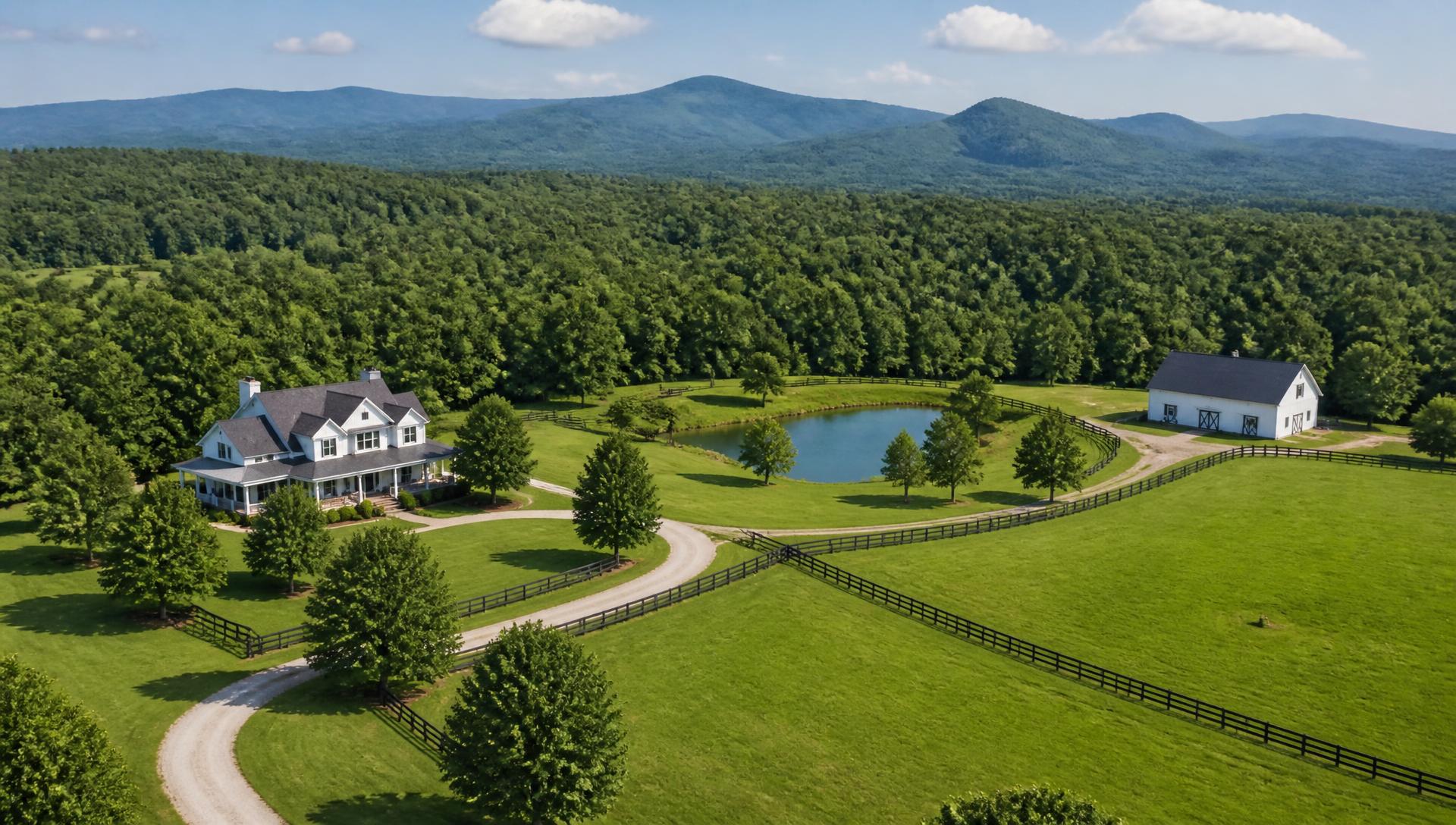
We hear the same story on site visits across Milton, Alpharetta, Cumming, Woodstock and Canton: "We love the house. We love the neighborhood. But the backyard is a slope of rock and red clay, and nobody ever goes out there." So the family starts browsing listings. Here's the honest truth from a crew that remodels yards for a living — most unusable yards in North Georgia can be fixed, and fixing yours usually costs far less than what you'd give up to move. This article walks through the options, the real numbers, and how to decide.
Why So Many North Georgia Yards Are Unusable
If your backyard is too steep, too rocky or too wet to enjoy, you're not alone — it's the defining challenge of building in the foothills. Much of Forsyth, Fulton, Cherokee and Pickens counties sits on rolling terrain with shallow rock and heavy clay. Builders grade just enough to set the house, pour the driveway and pass inspection. Whatever is left behind the house — often a 15–25% slope covered in weeds — becomes "the backyard."
The result is a yard that can't hold a playground or swing set, can't fit a basketball or pickleball court, washes out every time it rains, and gives the dog nowhere flat to run. Families end up with 10,000 square feet of property they pay taxes on but never set foot in.
The Real Cost of Moving in Today's Market
Before you list the house, run the full math — not just the sale price. In the current North Georgia and North Metro Atlanta market, a move-in-ready home on a level lot commands a serious premium. Here's what leaving actually costs:
- A higher purchase price. Level, usable lots are scarce in Milton, Alpharetta and Cumming, and buyers pay for them — often $100,000–$250,000 more than a comparable home on a sloped lot.
- A new interest rate. If you bought or refinanced years ago, you're likely holding a rate well below today's. Trading a locked-in low mortgage payment for a new loan at current rates can add hundreds to over a thousand dollars per month for 30 years.
- Transaction costs. Realtor commissions, closing costs, moving expenses, and the little repairs every sale demands typically run 8–10% of your home's value.
- Lost equity momentum. You're in a strong position — good equity, a manageable payment. Selling resets parts of that equation.
- The same dirt problem. Unless you pay the premium for a flat lot, your next North Georgia home may come with the same sloped backyard you were trying to escape.
The Alternative: Remodel the Ground You Already Own
Here's what most homeowners don't realize: the slope is not permanent. With engineered retaining walls, structural fill dirt, proper grading and drainage, we convert steep, rocky, unusable ground into flat, stable, buildable outdoor space. It's the same earthwork we do on raw land — applied to the yard behind your house.
A typical backyard remodeling project carves one or more level terraces out of the slope. What goes on that new flat ground is up to the family:
- A level lawn and safe playground or swing set area for the kids
- A basketball court, pickleball court or multi-sport court
- A fenced dog run or pet area with room to actually play
- A patio, fire pit and outdoor living space sized for entertaining
- A pool-ready pad, garden beds, or a flat lawn for the first time
What a Backyard Remodel Typically Involves
Every property is different, but the process follows the same sequence we use on raw acreage — because a sloped backyard is raw acreage, just smaller:
- 1. Site assessment. We walk the property, measure the slope, check soil and rock depth, and trace where water currently goes. Drainage is designed before anything is built.
- 2. Design the levels. We plan where walls sit, how much fill is needed, and how the new terraces tie into the house, driveway and neighbors. Larger projects can start with a 2D or 3D design and rendering so you see the finished yard before we move a yard of dirt.
- 3. Build the structure. Retaining walls go in first — engineered block, boulder or timber depending on height and load. Then structural fill dirt is placed and compacted in lifts, not dumped.
- 4. Grade, drain and finish. The new surface is graded to shed water correctly, drainage is piped to daylight, and the space is finished with sod, a court surface, or a patio base — ready for whatever the family has planned.
The Numbers: Remodel vs. Relocate
Let's be direct about money, because that's what this decision comes down to. A backyard remodel with retaining walls, fill and grading is a real construction project — it's not a weekend landscaping job. Depending on slope, access, wall height and finishes, most North Georgia projects land somewhere in the $40,000 to $150,000+ range, with complex terraced projects above that.
Now compare that to moving: a $150,000 higher purchase price financed at today's rates costs roughly $900–$1,000 more per month — that's over $300,000 in added payments across a 30-year loan, before commissions and moving costs. Against that math, investing in the property you already own — with your low rate and built-up equity intact — often isn't just the cheaper option. It's the financially smarter one.
And unlike a higher mortgage, the remodel adds real, appraised value to your home. A level, finished backyard in a neighborhood full of sloped ones stands out the day you ever do sell.
When Moving Actually Is the Right Call
We're in the business of fixing land, not talking people out of moving — and sometimes moving is right. If your family has outgrown the house itself (not just the yard), if you need a different school district or commute, or if your lot has hard limits like setbacks, easements, a septic field or a stream buffer that can't be moved, a new property may be the honest answer.
That's also a conversation we can help with. We walk acreage with buyers before they close, and a realistic budget for the next property's land work beats a surprise after closing.
Don't Forget the Front Yard
The same thinking applies out front. A steep, eroding front yard, a driveway that's hard to use, or a slope you mow with a rope all respond to the same tools — retaining walls, terracing, fill and grading. A front yard remodel fixes function and curb appeal at the same time, and it's usually the first thing buyers notice if you ever do sell.
How to Decide: A Simple Framework
If you're on the fence, work through these five questions before you talk to a realtor:
- Do we love the house, the street and the schools? If yes, the yard is the only problem — and yards can be fixed.
- What would our new monthly payment actually be? Price the rate difference, not just the sale price.
- What would we pay for a level lot elsewhere? Get real comps in your target area.
- What would fixing our yard cost? Get a real number from a site visit, not a guess.
- Which option puts us outside more, sooner, for less? That's usually the answer.
You don't have to trade a great mortgage, strong equity and a neighborhood you love for a flat backyard. In most cases, the yard can come to you. John Franklin Land Group remodels sloped, rocky, unusable properties across Milton, Alpharetta, Cumming, Woodstock, Canton, Roswell, Johns Creek and the North Metro Atlanta area — from retaining walls and fill dirt to complete outdoor living builds. The first step is a walk of your property and an honest number. Start a project and we'll help you weigh staying against moving with real figures, not guesses.