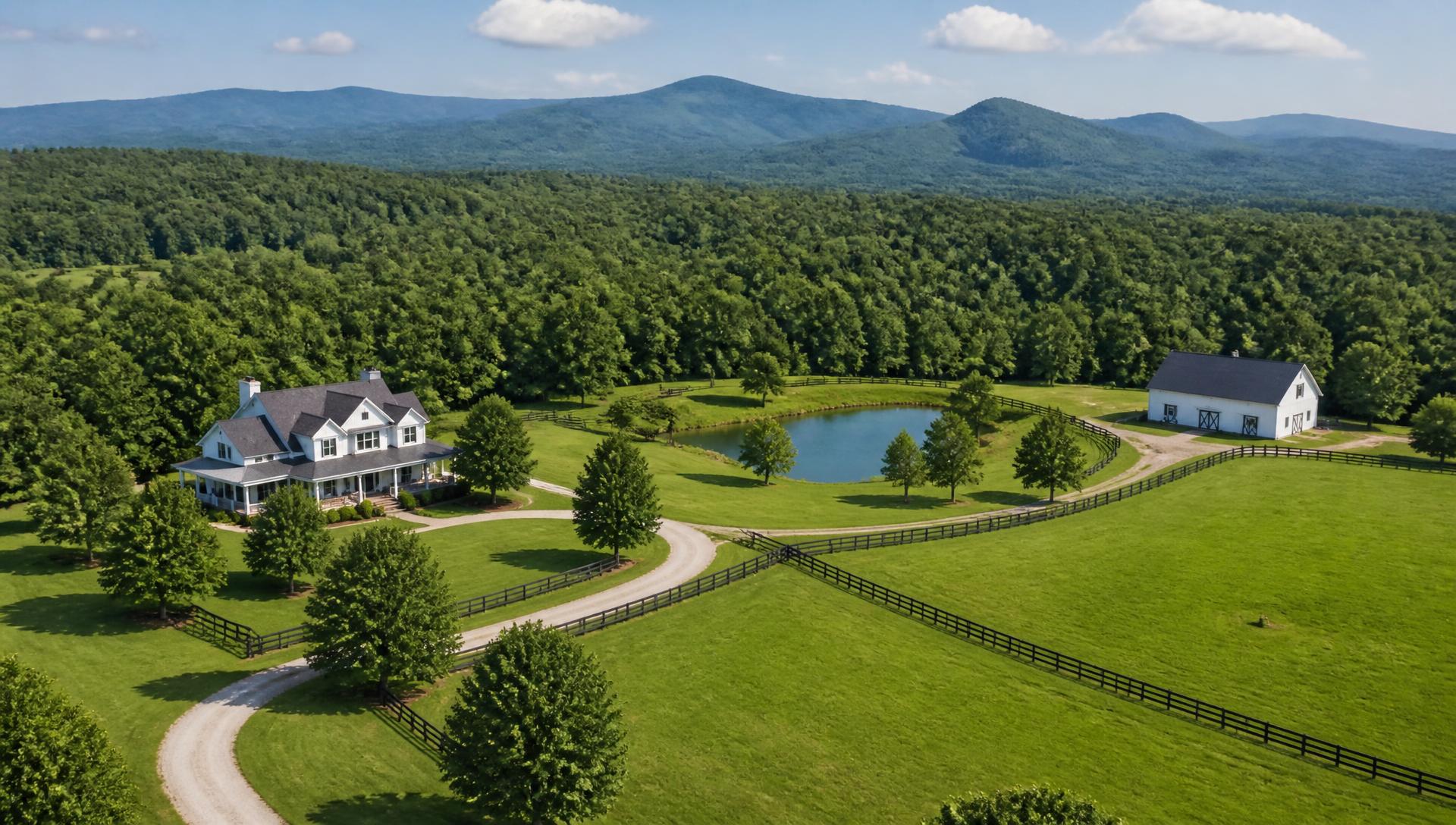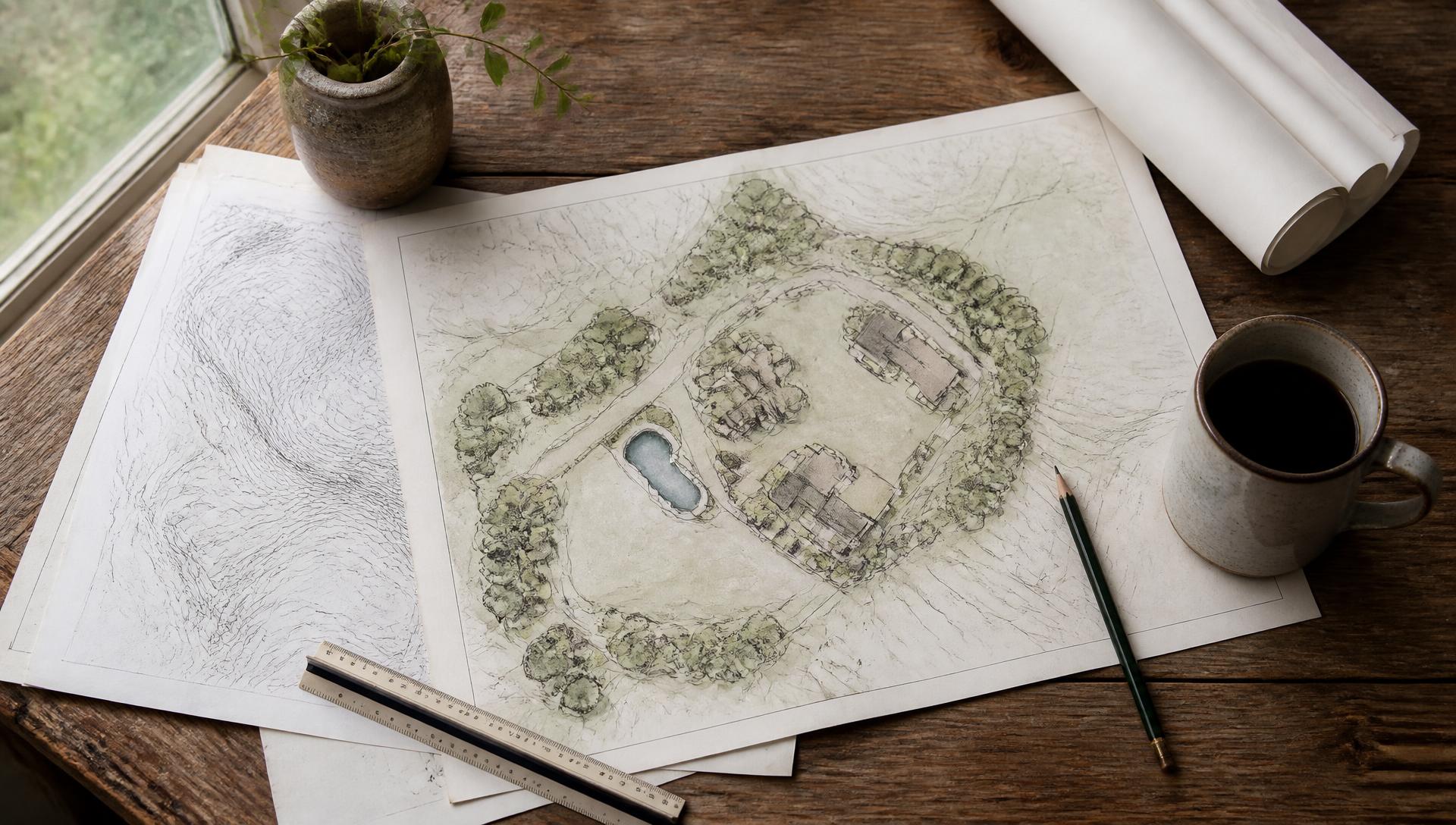
Almost every landowner phases the work. The costly version of phasing is deciding each phase when you get to it. The cheap version is deciding the whole property once, then releasing it in stages. Here is the order that avoids rework.
Phase 0 — the whole-property plan
One map showing the drive, drainage, building pads, barn, fencing, utilities and landscape zones. It doesn't commit you to building any of it. It commits every later phase to a location that still works.
Phase 1 — access and drainage
Nothing else can be delivered, built or maintained without them, and both are destroyed by later construction traffic if built out of order. Rough the drive to base, install culverts and establish outlets. Finish surfaces come later.
Phase 2 — pads and utility corridors
Cut and compact pads for the house, barn and shop while equipment is mobilized, and trench utility corridors along routes chosen for all of them at once. Balancing cut and fill across the site in one pass saves hauling later.
Phase 3 — structures
Barn, shop or house go on ground that's already stable and drained. Roof runoff ties into the drainage system built in phase 1.
Phase 4 — fencing, pasture and walls
Fence lines go in after heavy equipment has finished crossing the property. Pasture seeding follows final grading so it isn't re-torn for the next phase.
Phase 5 — finish
Driveway surface course, terraces, outdoor living, lighting and planting. Finish work last means it isn't damaged by construction, and by then the ground has settled.
Same total budget, spread over the years you choose, with nothing built twice. That plan is usually where we start with a new property.