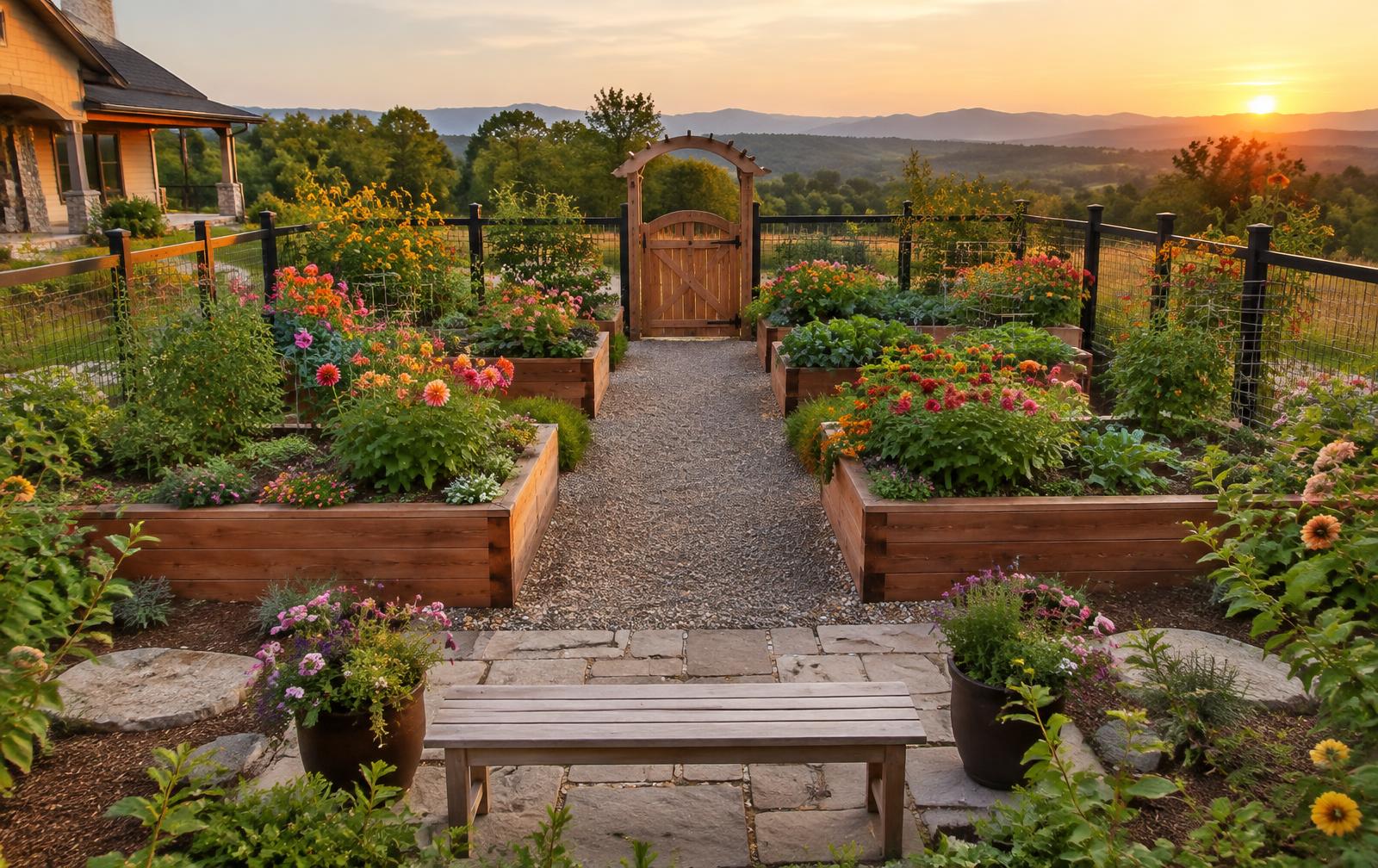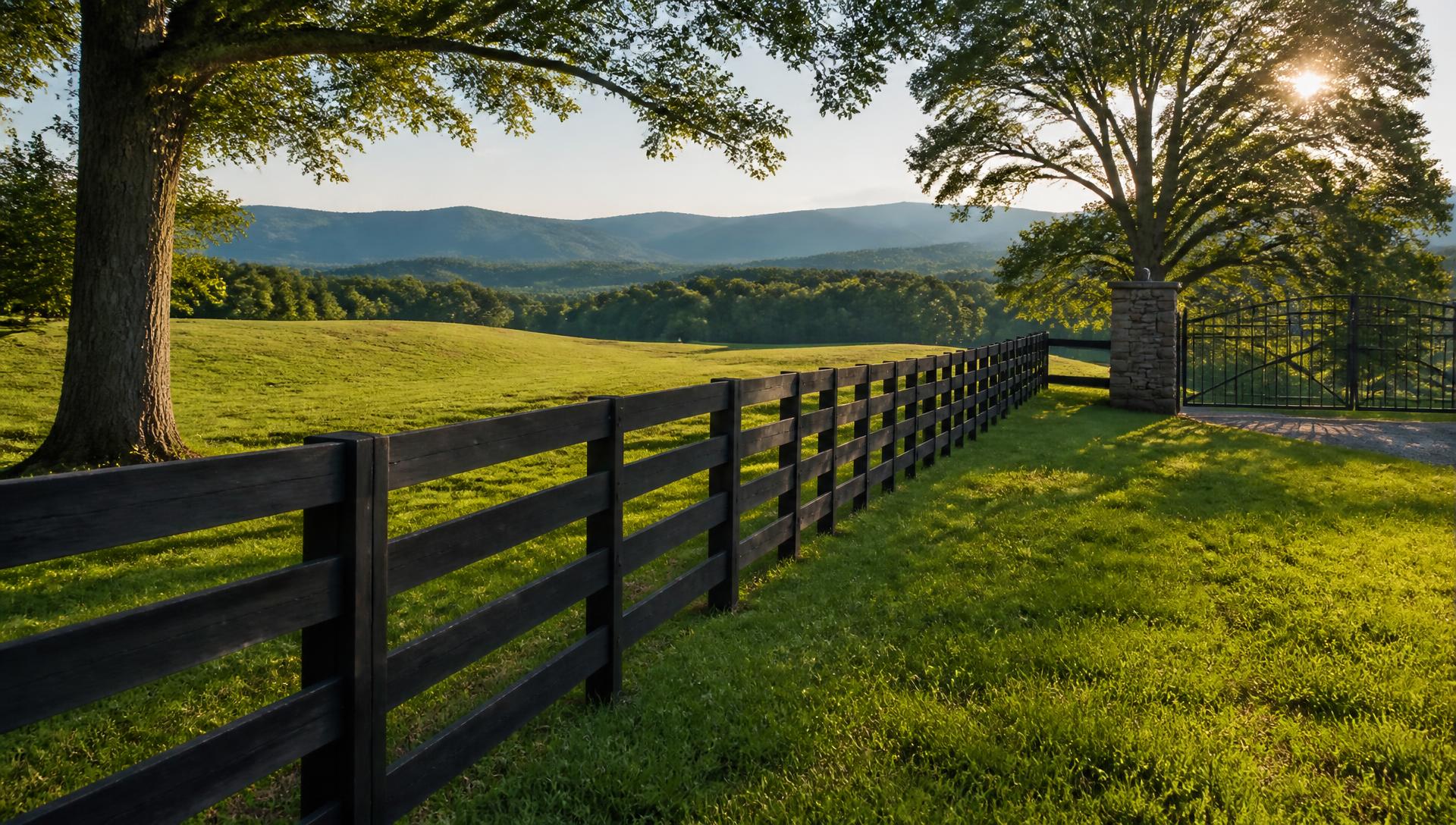
A fence should do more than draw a line around your property. It should match the way you live, protect the animals you care for, organize everyday access and create boundaries that work in real conditions. A six-foot privacy fence in Alpharetta, horse fencing in Milton, cattle fencing in Ball Ground and a secured estate entrance in Blue Ridge are different projects, even when they share similar materials. At John Franklin Land Group, we help homeowners, farmers, ranchers, homeowners associations, commercial property owners and public-sector property managers think through those differences. This guide explains residential and agricultural fence styles, livestock safety, electric fencing, automatic gates and the factors behind a fencing installation quote across North Georgia and North Metro Atlanta.
Start With the Reason for Your Fence
Before choosing wood, metal or wire, decide what the fence must accomplish. Privacy fencing screens outdoor living spaces. Pasture fencing contains animals and supports grazing management. Security fencing discourages unauthorized access. Decorative fencing defines an entrance without hiding the architecture. Some properties need all four, but one material rarely performs every job equally well.
Homeowners may want a backyard that feels private, a defined play area or a barrier for pets. Farmers need reliable livestock containment and practical equipment access. An HOA may need consistent neighborhood boundaries and entry controls. Commercial and government properties may need visitor routing, service access and documented maintenance responsibilities. Identifying the priority helps avoid spending money on a fence that looks right but solves the wrong problem.
Be specific about unwanted visitors and wildlife, too. A fence intended to discourage deer differs from one intended to contain a dog or reduce access by coyotes. Height, openings, ground gaps and gate closure all matter. No fence guarantees predator exclusion or prevents every intrusion; realistic security combines suitable barriers, maintenance and a clear access plan.
Six-Foot Privacy Fencing for Residential Subdivisions
Six-foot wood privacy fencing is a familiar choice for subdivision homes in Cumming, Alpharetta, Canton, Woodstock and Marietta. Solid-board styles create a more enclosed yard for patios, gardens and family gatherings. Board-on-board designs overlap boards to reduce direct sightlines as wood moves, while shadowbox fencing alternates boards for airflow and a finished appearance on both sides. Shadowbox does not provide complete visual screening from every angle.
Wood offers design flexibility and can coordinate with a traditional home, but it needs care. Moisture, ground contact, movement and finish maintenance affect its condition. Vinyl and composite privacy systems offer different maintenance trade-offs and upfront costs; their performance depends on the specific product, reinforcement and installation. We compare the actual specifications rather than treating every fence sold under the same material name as equivalent.
A six-foot fence is a style option, not a promise that six feet is permitted everywhere. Confirm HOA approvals, property lines, local height restrictions, setbacks and visibility requirements before installation. Front-yard and corner-lot rules may differ from backyard rules. A property survey is more useful than assuming the old fence or a mowing line marks the legal boundary.
Brick Walls and Masonry Property Boundaries
Brick privacy walls, stone entry columns and masonry boundary walls create a substantial architectural edge for private estates, neighborhood entrances and commercial properties. A brick wall can complement an existing home and provide visual screening. Combining masonry columns with metal fence panels often gives an entrance a defined appearance without making the entire frontage feel closed.
Masonry is not simply a heavier substitute for wood fencing. Footings, soil conditions, wall height, wind exposure, movement joints and drainage require appropriate design. A freestanding privacy wall and a retaining wall perform different structural jobs. If a wall must also hold back soil, the retaining function needs its own assessment; see our retaining wall services.
Expect masonry fencing to involve more site preparation, material handling and skilled labor than many standard fence systems. It can be a good fit where appearance and screening justify the investment, but it must preserve sightlines near roads and provide practical openings for daily access. The right design balances the entrance experience with long-term maintenance and safe vehicle movement.
Metal Fencing: Aluminum, Steel, Ornamental and Chain Link
Ornamental metal fencing defines boundaries while keeping views open. Aluminum is frequently considered for residential yards and decorative boundaries; steel systems can suit applications that need different strength or security characteristics. Coatings, fasteners, panel construction and local exposure matter. A premium-looking finish alone does not tell you how well a fence will resist damage or corrosion.
Chain-link fencing is another practical option for service yards, equipment areas, certain commercial boundaries and pet enclosures. It is not the same visual product as ornamental metal fencing, but it can provide a straightforward, inspectable barrier. Security specifications may call for particular mesh sizes, framework, gate hardware or access controls. Privacy inserts change visibility and wind loading and should be evaluated with the fence system.
For children, pets or pool-adjacent spaces, compare opening sizes and gate behavior carefully. A decorative fence is not automatically a compliant pool barrier. Local requirements, latching, climbability and the intended users should guide selection. Metal fencing in Buckhead, Milton or North Metro Atlanta can look refined while still being planned around real safety needs.
Horse Fencing for Equestrian Estates, Paddocks and Pastures
Equestrian fencing must account for how horses move, react and interact with boundaries. Visibility matters, as do smooth animal-facing surfaces, secure gates and openings that reduce entrapment risk. A fence that works for a quiet adult herd may not suit foals, stallions or a small high-contact turnout area. We start with the animals and management routine, not just the preferred photograph.
Board fencing provides a visible, traditional appearance for horse farms in Milton, Alpharetta, Canton and Ball Ground. Appropriate horse mesh can add containment between rails and below them. No-climb horse fencing and diamond-mesh products deserve consideration, but the label is not enough: evaluate opening dimensions, tension, fastening and the complete installed system. Larger openings intended for other livestock can create risks for horses.
Paddock layout is equally important. Plan separation, gate locations, feed access and routes for tractors, trailers, veterinarians and farriers. Avoid creating narrow dead ends or sharp corners where animals can become trapped or pressured by other horses. Cross-fencing should support pasture rotation without turning routine movement into a stressful obstacle course. See our equestrian property services for planning fencing alongside barns, arenas and drainage.
Why We Do Not Recommend Exposed T-Posts for Horses
Exposed steel T-posts are not our recommended choice for horse paddocks and equestrian confinement areas. Their narrow, hard profiles and exposed tops can contribute to puncture wounds, cuts and other serious injuries if a horse strikes, falls against or goes over them. Horses can spook or challenge a boundary unexpectedly; choosing a cheaper post should not mean overlooking that contact risk.
Protective caps may reduce exposure to sharp tops, but they do not make every T-post installation suitable for horses or remove all collision risks. Where existing steel posts are present, assess the entire fence with an experienced equine professional rather than assuming caps alone resolve the problem. Suitable wood or purpose-designed alternatives can offer a different risk profile when installed correctly.
This is an equine-specific recommendation, not a statement that every T-post fence is unsuitable for every farm. Steel posts are used in some cattle and agricultural systems, where species, fence design and handling practices differ. We also avoid recommending barbed wire for horse enclosures because contact can cause severe injury. A pasture shared by horses and cattle should be designed around the requirements of the more vulnerable animals, not only the least expensive livestock fence.
Cattle Fencing and Working Farm Layouts
Cattle fencing, farm fencing and ranch fencing should match herd behavior, grazing plans and handling needs. Options may include suitable woven wire, properly designed high-tensile systems, electric offsets and strong rail or pipe arrangements in higher-pressure areas. Bulls, young stock and mixed livestock can require different layouts. Material choice must account for the animals that will actually use the pasture.
A long pasture perimeter and a livestock handling area are not interchangeable. Corners, end assemblies, gates and tensioning points carry important loads. Around gathering or handling areas, the design must anticipate more animal pressure than an open grazing boundary. Gates also need to accommodate feed delivery, hay equipment and emergency access without encouraging livestock to gather in an unsafe roadside opening.
For farm fencing in Jasper, Ellijay, Ball Ground and Canton, terrain and land use can influence the layout as much as material cost. Cross-fencing may improve pasture management, but it should leave sensible routes to water, shelter and machinery access. A property-wide plan helps owners phase the work without building sections that must later be removed for roads, barns or utility improvements.
Electric Fencing: A Managed Deterrent, Not a Set-and-Forget Barrier
Electric fencing can discourage animals from leaning, rubbing or testing an appropriate physical boundary. It is also used in some managed grazing systems. The energizer, conductor, insulators and grounding arrangement must suit the installation and the livestock. For horses, visibility and safe physical fence design remain important; an energized strand does not make an otherwise hazardous enclosure safe.
Use an energizer designed for fencing and follow its installation instructions. Never improvise by connecting fencing directly to household electrical power. Vegetation contact, damaged insulators, poor grounding and broken connections can reduce effectiveness. Owners need a way to check operation and a realistic maintenance routine, especially along wooded property lines and after storms.
Solar-powered electric fence energizers and solar-powered driveway gates are different systems with different power demands. A fence energizer is selected for containment needs; a gate operator must move a physical gate and support its accessories. Keep those decisions separate in the estimate. Where electric fencing is proposed near pedestrian access or public-facing areas, review signage, placement and applicable requirements before installation.
Private Roads, New Builds and Secured Entrances
Private road fencing and gated property entrances work best when planned with the driveway, rather than added after paving. Consider road frontage, vehicle stacking, trailer turning space, delivery access and sight distance. A beautiful entrance becomes frustrating if a truck cannot clear the gate or a visitor must stop in the public road while entering a code.
For new builds, identify future fence corridors before construction traffic, utility trenches and grading change the site. Temporary construction controls and permanent fencing have different purposes. Coordinate the final boundary with surveys, easements, drainage routes and planned outbuildings. An entrance should not block an existing access right or create a dam across a runoff path.
A secured estate entrance in Blue Ridge or Ellijay may need different site preparation than a subdivision gate in Cumming. Slopes, narrow access and long private drives affect equipment choices and installation sequencing. Our driveways and property access services connect the gate decision to the route vehicles must actually travel.
Automatic Gates, Keypads and Solar-Powered Access
When clients ask for solar keypad fencing, they usually mean a fence paired with a solar-powered automatic gate and keypad access control. The fence is the boundary; the operator powers the gate, and the keypad controls authorized entry. Swing and sliding gates have different clearance, footing and hardware needs. Gate weight, opening width, wind exposure and operating frequency help determine the appropriate system.
Solar power can be useful where a suitable electrical connection is distant, but it is not automatically the best or cheapest solution. Available sunlight, shade, battery storage, daily gate cycles and accessory demands must be assessed together. A hardwired operator may better suit a busy entrance where practical electrical access is available. The quote should identify the selected power approach and any electrical work needed.
Automatic gates need safety planning as well as convenience features. Appropriate entrapment protection, vehicle detection and safe operating clearances are essential. Discuss manual release, outage procedures and authorized emergency access. Installation should follow the operator manufacturer's requirements and applicable safety standards; a keypad alone does not prevent a moving gate from injuring someone.
Security Cameras, Activity Alerts and Everyday Gate Management
A secured entrance can include requested features such as intercoms, cameras, visitor codes, vehicle detection and activity or safety notifications. Availability depends on the selected hardware, connectivity and installation scope. Remote alerts may require reliable cellular or internet service, subscriptions or additional power capacity. We discuss those dependencies before presenting them as part of an access solution.
For homeowners associations and commercial properties, plan who can issue codes, remove former users and respond when the gate malfunctions. Shared codes are convenient but provide less accountability than individually managed access. Public-sector owners may also have procurement, accessibility, recordkeeping or security requirements that need to be established before equipment is specified.
Camera coverage does not guarantee prevention or emergency response. Define what an alert actually means and who receives it. Consider privacy, neighboring properties and appropriate recording practices. A good security plan combines realistic technology expectations with a maintained fence, functioning gates and clear responsibility for daily operation.
How We Quote Fence Installation in North Georgia
A useful fencing quote begins with the scope and the property, not a single advertised price per foot. We consider fence type, materials, linear feet, height, installation method, labor, equipment, location and access. A measured boundary, chosen style and gate schedule make estimates more meaningful. Comparing total prices without comparing those assumptions can hide important differences.
Linear footage is the length of the fence route, not the property's square footage or acreage. Corners, bracing, transitions and gates change the work involved. Taller systems can need different posts and foundations. Masonry, wood, wire and metal also involve different handling, fastening and finishing methods. An estimate should distinguish the fence itself from gates, removal, site preparation and optional security equipment.
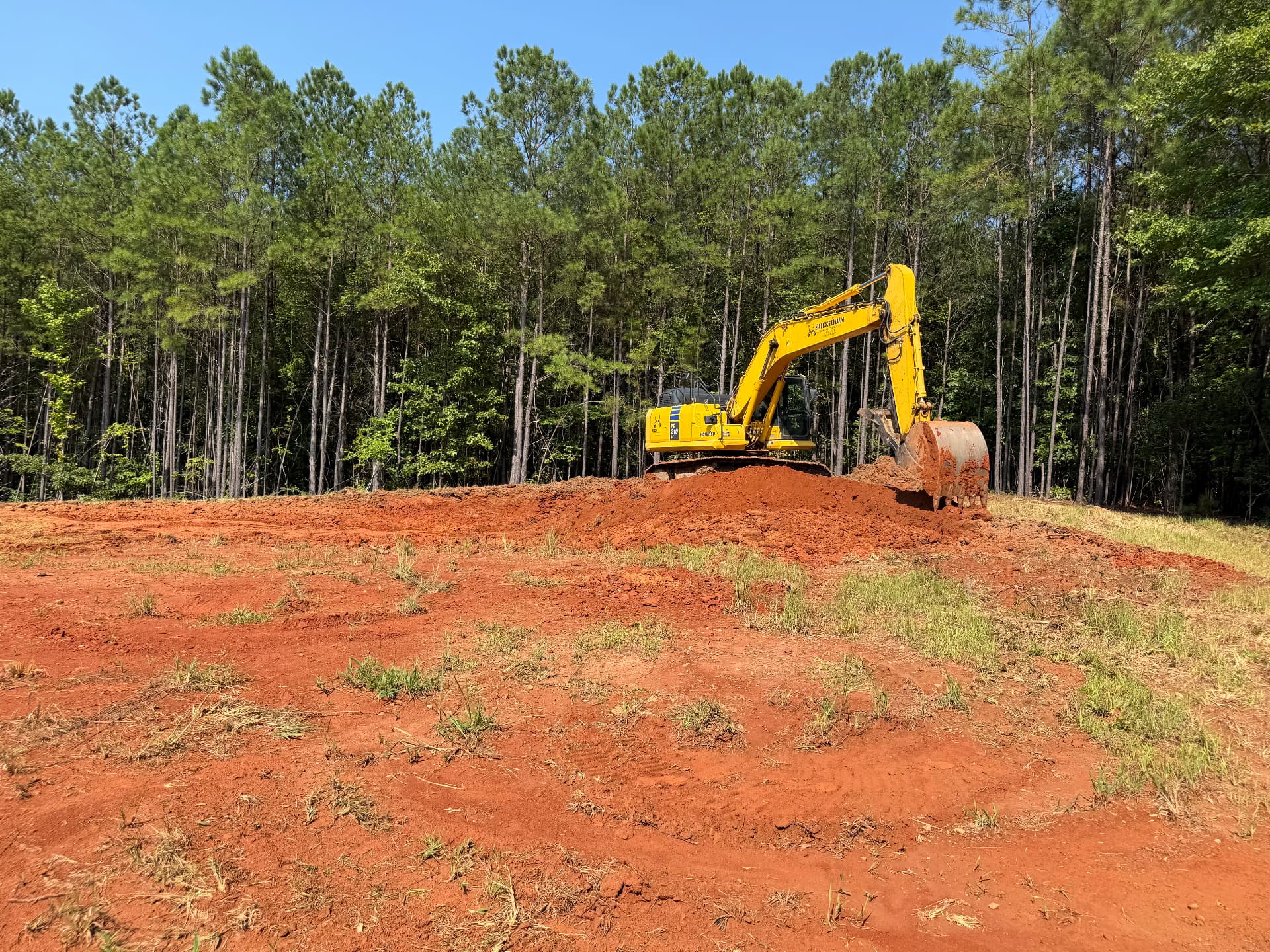
Difficult access, uneven ground and rough terrain increase installation costs. Rocky areas can slow excavation, wooded lines can limit machinery movement and steep slopes can require more careful handling. Bringing suitable equipment to a remote pasture is different from working beside an accessible residential driveway. Tree and brush removal, stump work, disposal and soil restoration belong in the scope when required.
Powered gates add further decisions: electrical access or solar power, operator selection, battery requirements, keypad or intercom equipment, detection and requested alerts. Surveys, engineering, approvals and utility coordination may also be necessary depending on the project. We aim to make inclusions and exclusions clear so you know what is being priced and what could change after further site investigation.
Sloped Lots, Rough Ground and Drainage Along Fence Lines
Fence installation on sloped land requires a deliberate approach. Depending on the selected system, panels may step with grade or follow the slope within their allowed limits. Ground gaps matter for pets and livestock, while panel limits matter for appearance and performance. A fence should not be forced into a layout the product was not designed to accommodate.
Water also needs somewhere to go. Low spots, drainage channels and seasonal runoff can undermine posts or carry debris into wire. Avoid treating a fence or masonry wall as an accidental water barrier. On affected properties, drainage and erosion planning may need to happen before the final fence alignment is settled.
Ask about cleanup and stabilization after installation. Disturbed soil, access tracks and cleared corridors need appropriate attention. The work is not finished merely because the last gate is hung; the surrounding land must remain practical to maintain and inspect.
Keeping a Secure Fence Secure
Fence security depends on ongoing inspection. Walk the boundary periodically and after storms. Look for loose boards, damaged mesh, leaning posts, open ground gaps and gates that no longer close or latch reliably. On farms, animal pressure and equipment contact can create weak points long before the whole fence looks visibly worn.
Check powered gates and electric fences according to their manufacturer guidance, including safety devices, batteries and operation. Keep vegetation from interfering with moving gates or energized conductors. When an existing fence is compromised, discuss repair versus replacement based on the whole system. Replacing a few panels may not resolve deteriorated posts or a layout that never suited the animals.
No material eliminates the need for care. The most secure boundary is one whose design fits the property and whose owner understands how to maintain it. Planning for inspection access and practical repairs is part of choosing the right fence from the beginning.
Fencing for Milton, Cumming and Our North Georgia Service Areas
John Franklin Land Group helps clients evaluate residential fencing, equestrian fencing, farm fencing and property entrance improvements across our service areas. Explore Milton, Alpharetta, Cumming, Canton and Woodstock for local property services. We also serve owners in Ball Ground, Jasper, Ellijay, Blue Ridge, Marietta, Buckhead and North Metro Atlanta.
Whether you manage a subdivision home, private estate, horse farm, cattle pasture, neighborhood entrance or commercial property, bring us the goals before settling on a material. Share your survey if available, photographs of problem areas, the animals involved, desired privacy and access needs. From there, we can discuss the fence route, preparation, gate options and a scope that reflects your property rather than a generic package.
Further Reading on Horse Fence Safety
For independent animal-safety guidance, see University of Georgia Extension: Fences for Horses, UGA Equine: Fencing for Horses and Iowa State University Extension: Calculating the Amount of Fencing for Horses. These resources explain why visibility, openings and fence design matter. Use them alongside advice from your veterinarian and a qualified installer; this article is a planning guide, not a site-specific engineering or livestock-safety assessment.
A secure property starts with a fence designed for its purpose. From a simple residential privacy fence to paddocks, pastures and a controlled estate entrance, we can help you compare the options. Explore our fencing services, contact us or call 678-578-8114 to discuss your property and request a fencing consultation.