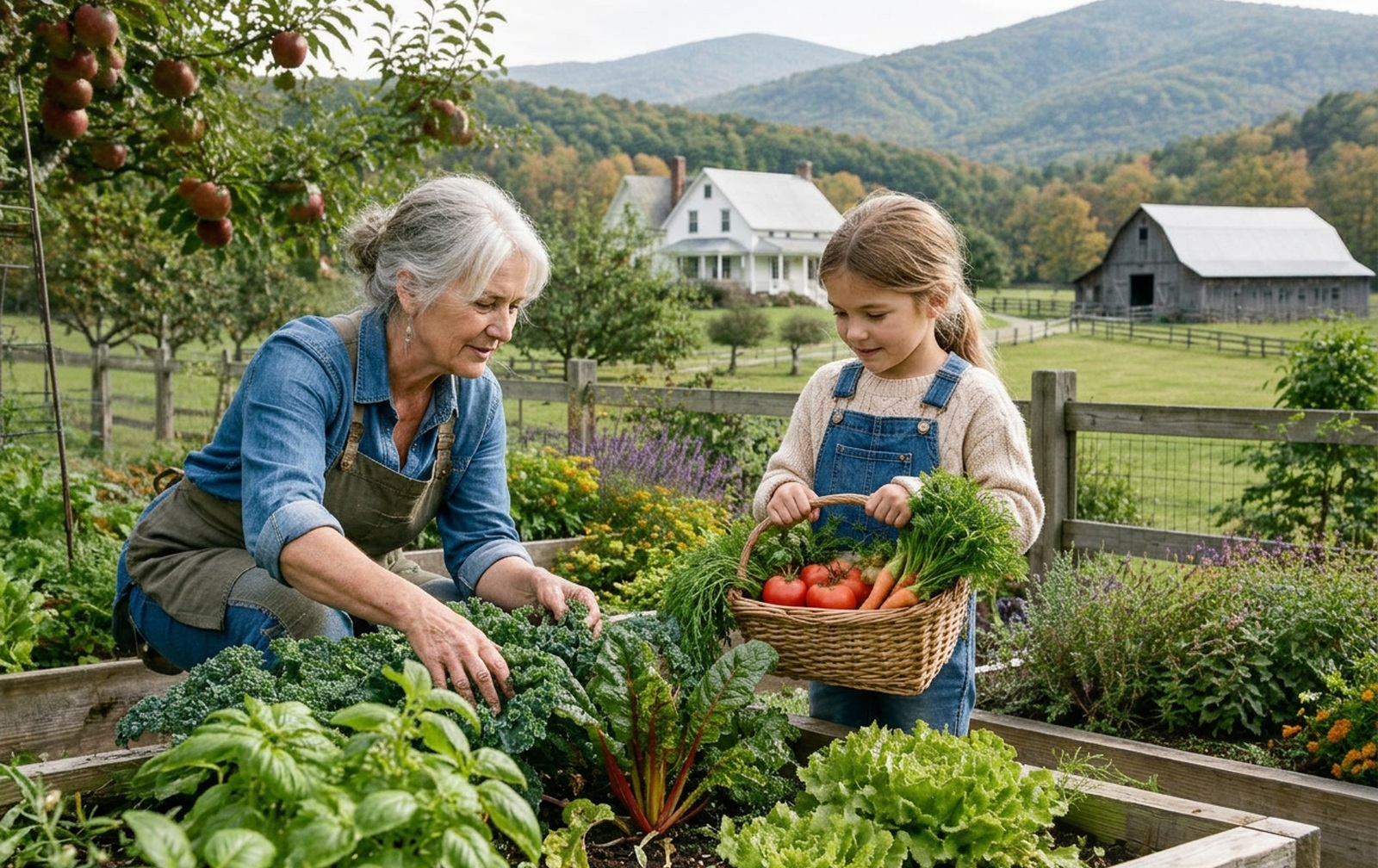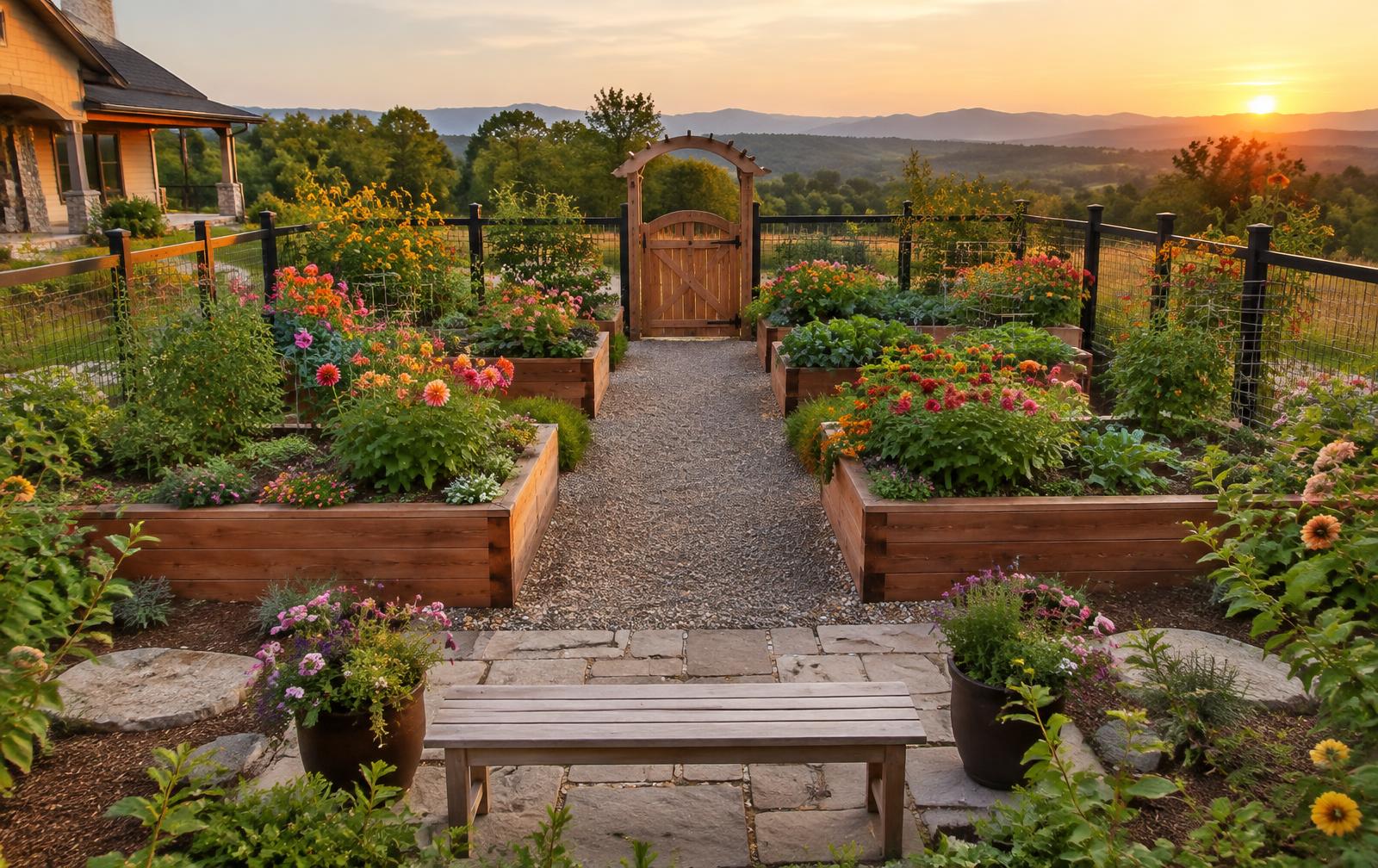
There's a reason the most-photographed gardens in the country look the way they do. Martha Stewart's kitchen gardens, the English potagers, the classic American farmhouse cutting garden — they're beautiful because they were built, not just planted. Symmetrical raised garden beds, crisp gravel paths, a tall fence that keeps the deer out, an arbor gate, a bench where you can sit with your coffee and watch it grow. In North Georgia, where red clay, sloped ground and hungry deer defeat most backyard gardens, that structure matters even more. We design and build vegetable gardens, flower gardens and kitchen gardens for homes and commercial properties across Milton, Alpharetta, Cumming, Canton, Woodstock, Roswell, Johns Creek, Ball Ground, Jasper, Ellijay and Blue Ridge. We focus on the part most garden guides skip: the planning, machine work and construction that turn a patch of lawn or hillside into a garden that produces for decades. Here's how it's done, start to finish.
Step 1: Choosing the Right Garden Site
The best garden in the world won't produce in the wrong spot. Before any design, we walk the property looking for:
- Sun: vegetables and most cutting flowers need 6–8 hours of direct sun; tomatoes, peppers, squash and zinnias want the full 8+. South- and east-facing exposures are ideal.
- Drainage: avoid low spots where water sits after rain — our drainage team can fix a wet site.
- Slope: gentle slopes can be terraced; steep ones need grading and retaining walls.
- Water access: a hose bib or irrigation line close by makes daily watering realistic.
- Proximity to the kitchen: a kitchen garden you pass every day gets used; one at the back of the property gets forgotten.
- Tree roots and shade: keep beds out of the drip line of large oaks and pines.
Step 2: Garden Layout and Design
A great garden layout balances beauty and function. The classic formal kitchen garden uses a four-square or quadrant plan — four matching beds around a central feature like a birdbath, sundial, fountain or urn, with paths on every side. Larger gardens extend that grid into six, eight or twelve beds, often with a perimeter border for flowers, herbs and berries.
Design rules we follow on every garden:
- Bed width of 3–4 feet so you can reach the center from either side without stepping on the soil.
- Bed length of 8–12 feet for easy movement around the garden.
- Main paths 4–5 feet wide for wheelbarrows and garden carts; secondary paths at least 2–3 feet.
- Symmetry and axis — a straight line from the gate through the center of the garden to a focal point.
- Room to grow — leave space for future beds, a greenhouse, a potting shed or a cold frame.
Common Garden Sizes
The right size depends on how much you want to grow and maintain:
- Starter kitchen garden (about 20' × 20'): four raised beds, herbs and salad greens, a few tomato plants.
- Family vegetable garden (about 30' × 40'): six to eight beds — enough to feed a family through summer and put some up.
- Estate potager or cutting garden (50' × 50' and up): a dozen or more beds, flower borders, a central feature, an arbor entry and a sitting area.
- Commercial and community gardens: restaurant kitchen gardens, event-venue cutting gardens, HOA and school gardens with ADA-accessible beds and wider paths.
Step 3: Site Prep and Machine Work
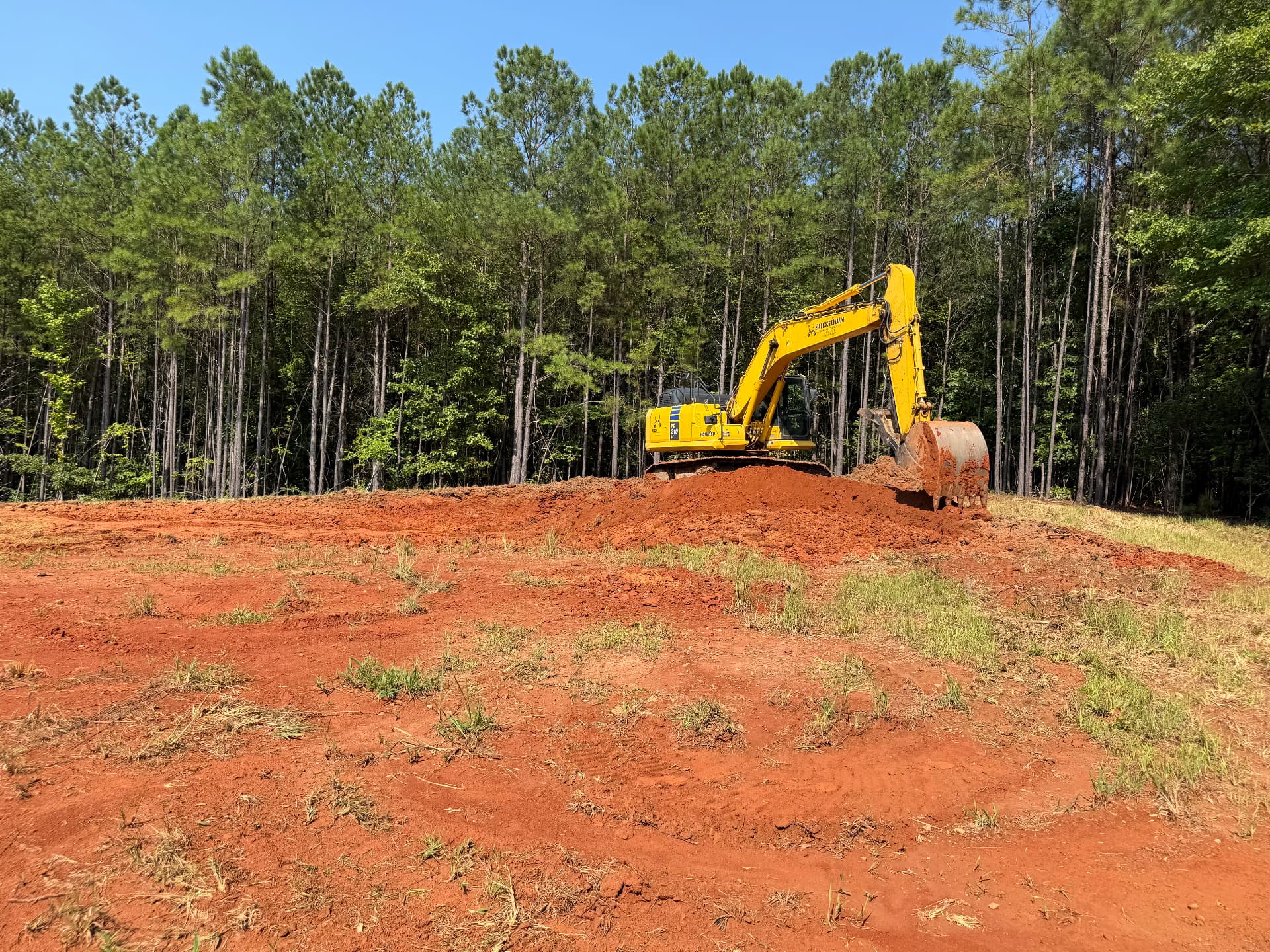
This is where our work begins in earnest. On most North Georgia properties, the garden site needs:
- Clearing brush, small trees, stumps and roots.
- Grading to create a flat or gently terraced garden pad — see our guide to leveling a sloped yard.
- Rock removal — common in Cherokee, Pickens and Gilmer counties.
- Drainage — French drains or swales on the uphill side to keep runoff out of the beds.
- Irrigation rough-in — trenching a water line so drip irrigation can reach every bed.
- Weed barrier under paths to keep Bermuda grass and weeds out.
Step 4: Building Raised Garden Beds
Raised garden beds are the answer to North Georgia's red clay. They warm up earlier in spring, drain well, and let you fill them with ideal soil from day one. Material options:
- Cedar or cypress: the classic look, naturally rot-resistant, typically lasts 10–15 years.
- Corrugated or galvanized steel: modern farmhouse style, very long-lasting.
- Stone or block: permanent, beautiful and ideal as a seat-height edge — built the same way as a small retaining wall.
- Brick: a traditional English-garden look.
Raised Bed Height
Most vegetable beds are 12–18 inches tall. 24–30-inch beds are easier on the back and double as seating when capped. For crops like carrots, potatoes and asparagus, deeper beds help. We line beds with hardware cloth on the bottom where voles and moles are a problem.
Step 5: Building Quality Garden Soil
Soil is the whole garden. Native Georgia clay is rich in minerals but dense, acidic and slow to drain. For raised beds, we fill with a blended garden mix — roughly equal parts screened topsoil, compost and an aerating material. For in-ground beds, we amend the native clay with several inches of compost worked into the top 8–12 inches.
We always recommend a soil test through the UGA Cooperative Extension office in your county. Most North Georgia soils need lime to raise the pH toward the 6.0–6.8 range that vegetables and most flowers prefer.
Step 6: Deer-Resistant Garden Fencing
Ask any gardener in Milton, Canton, Ball Ground or Ellijay what destroyed their garden and the answer is usually the same: deer. A deer fence is not optional in North Georgia — it's the difference between a harvest and a buffet.
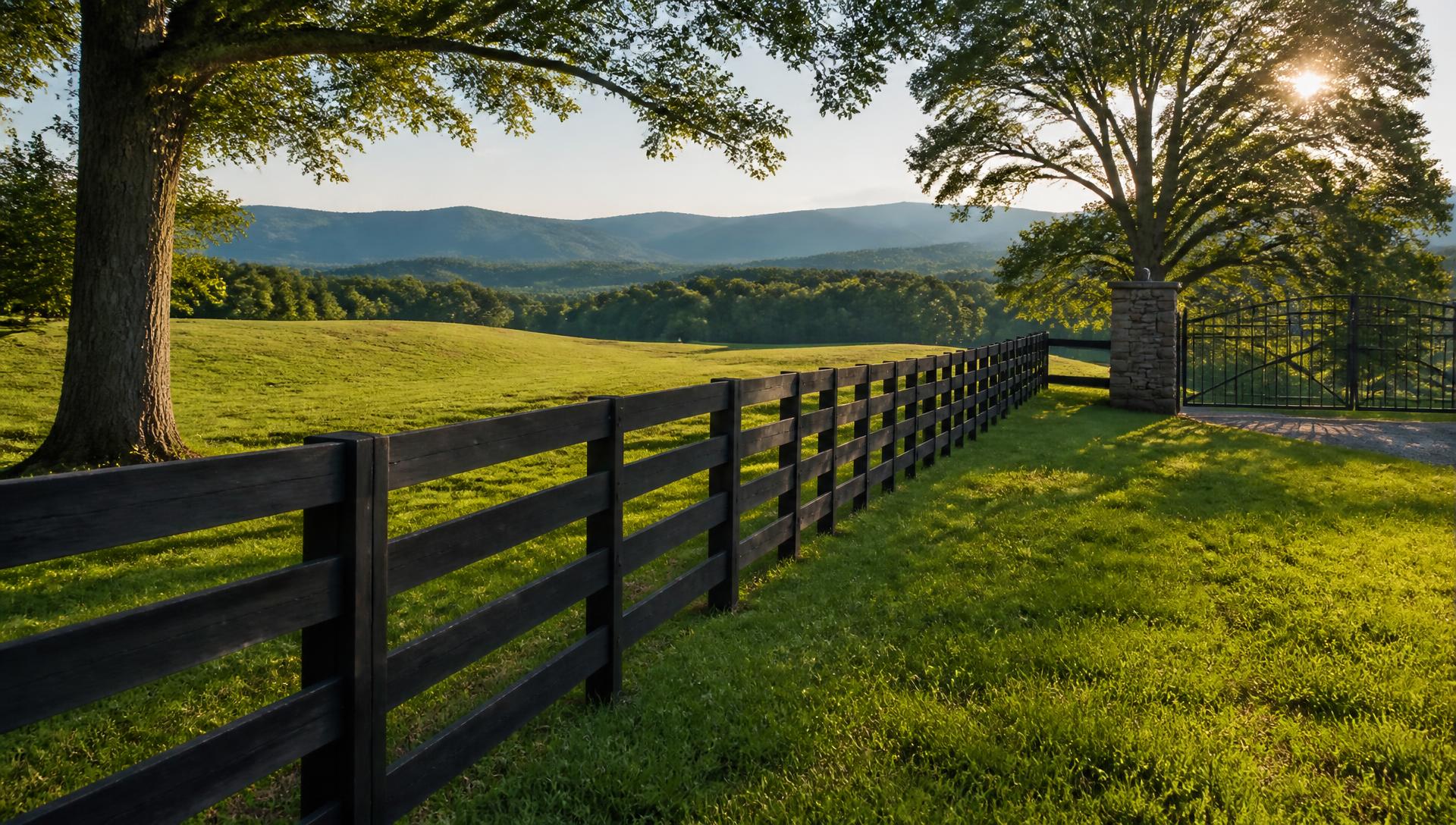
- Height: deer can clear 6 feet easily. We build deer-proof garden fences at 7–8 feet.
- Materials: black welded-wire or woven-wire mesh on wood or steel posts is nearly invisible from a distance; wood-framed panels with wire infill give a classic potager look.
- Below ground: burying 6–12 inches of hardware cloth along the base stops rabbits, groundhogs and armadillos.
- Posts set in concrete on corners and gates so the fence stays tight and square.
- See our full fencing services for posts, wire and wood options.
Step 7: Garden Gates and Access
The garden gate sets the tone for everything behind it. An arbor gate with climbing roses, clematis or pole beans is the signature entry of a Martha Stewart–style garden. Practically:
- A 4-foot pedestrian gate is the minimum; a double gate 8–10 feet wide lets a tractor, skid steer or truck in for soil and compost deliveries.
- Self-closing hinges and a good latch — a gate left open is an open invitation to deer.
- A firm threshold of stone or pavers so the entry doesn't turn to mud.
Step 8: Garden Hardscapes, Paths and Sitting Areas
Hardscapes are what make a working garden feel like an outdoor room. Our outdoor living crews build:
- Gravel paths — pea gravel or crushed granite over weed fabric, with steel or stone edging.
- Brick or flagstone paths for a formal look and all-weather footing.
- A central feature — a fountain, birdbath, sundial or large planter at the heart of the layout.
- Sitting areas — a stone patio with a bench, a pergola with a café table, or a fire pit at the garden's edge where you can enjoy the evening.
- Potting benches and garden sheds for tools and seed-starting.
- Low stone walls that terrace a sloped garden and double as seating.
Step 9: Irrigation
Drip irrigation on a timer is the single best labor-saver in the garden. It puts water at the roots, keeps leaves dry to reduce disease, and uses a fraction of the water of sprinklers. We run supply lines during construction so every bed can be connected on day one.
North Georgia Planting Calendar
North Georgia sits mostly in USDA zones 7a–7b, with the mountains around Blue Ridge and Ellijay running cooler. Timing varies with elevation — always check local frost dates — but as a general guide:
- Late winter (February–March): plant peas, spinach, lettuce, onions, potatoes, broccoli and cabbage; start tomato and pepper seeds indoors. Plant bare-root roses and fruit trees.
- Spring (April–early May): after the last frost — typically mid-April in the metro and later in the mountains — plant tomatoes, peppers, squash, beans, cucumbers, basil, zinnias, cosmos and sunflowers.
- Summer (June–August): succession-plant beans and zinnias; harvest daily; start fall brassicas from seed in late summer.
- Fall (September–October): North Georgia's second growing season — plant lettuce, kale, collards, carrots, garlic and cool-season flowers like snapdragons and sweet peas. Plant spring bulbs such as tulips and daffodils in November.
- Winter: cover crops, compost, bed repairs and planning. It's the best time to build a new garden so it's ready to plant in spring.
Best Plants for a North Georgia Cutting Garden
Flower gardens are some of our favorite builds. Varieties that perform well here include zinnias, dahlias, cosmos, sunflowers, snapdragons, lisianthus, celosia, peonies (in cooler northern areas), hydrangeas, roses and native coneflowers — plus herbs like lavender, rosemary and basil that attract pollinators to your vegetables.
For a food-producing garden, North Georgia favorites include heirloom tomatoes, peppers, okra, pole beans, squash, cucumbers, sweet potatoes, collards, kale and garlic, along with blueberries, blackberries and figs along the fence line. Mixing flowers into vegetable beds brings in bees and butterflies, improves pollination and makes the garden as beautiful as it is productive.
Gardens for Commercial Properties
We also build gardens for restaurants, event venues, wineries, farms, schools and HOAs. Commercial gardens call for wider ADA-accessible paths, taller or waist-height beds, durable materials, irrigation zoning and layouts that photograph well for events and marketing.
Garden Maintenance Through the Seasons
A well-built garden is a low-maintenance garden. Mulch paths and beds to hold moisture and suppress weeds, top-dress beds with an inch or two of compost every spring and fall, and check the deer fence and gate latch after storms. Rotate crop families between beds each year to reduce disease. In late fall, clear spent plants, plant garlic and cover crops, and let the garden rest until the February planting window returns.
Our Garden Construction Process, Start to Finish
Every garden we build follows the same sequence: site visit, design, grading and site prep, drainage and irrigation rough-in, bed and hardscape construction, fencing and gates, soil, and final walkthrough. Many clients start with a property design and 3D rendering so they can see the layout before we break ground.
We build gardens across Milton, Alpharetta, Cumming, Canton, Woodstock, Roswell, Johns Creek, Ball Ground, Jasper, Ellijay, Blue Ridge, Marietta and Buckhead — see our local pages for Milton, Alpharetta and Cumming.
Build the bones right and the garden takes care of the rest. Ready for a garden that feeds your family and fills your vases? Winter is the best time to build. Request a property consultation and we'll plan it with you.