Walk through almost any neighborhood in Milton, Alpharetta, Cumming, Canton or Woodstock and you'll see it: sloped backyards, red clay banks and yards that drop away from the house. In North Georgia, a retaining wall is often the difference between a yard you look at and a yard you actually use. As a retaining wall contractor serving North Georgia and North Metro Atlanta, we build, repair and replace walls every week — and the most common question we hear is simple: *what kind of wall should I build?* This guide walks through the reasons for retaining walls, structural vs. non-structural walls, the pros and cons of block, timber, natural stone, boulder and concrete retaining walls, double-sided (freestanding) walls, and what to do about a failing retaining wall.
Why North Georgia Properties Need Retaining Walls
North Georgia sits on rolling Piedmont hills and, further north toward Jasper, Ellijay and Blue Ridge, true mountain terrain. Add dense red clay soil that sheds water instead of absorbing it, and you get slopes that erode, settle and slide. A properly built retaining wall holds that soil in place and turns an unusable hillside into level ground.
Here are the most common reasons homeowners and landowners call us about retaining wall installation:
- Creating flat, usable yard space for patios, playgrounds, pickleball or basketball courts, pet areas and lawns — see our backyard remodeling work.
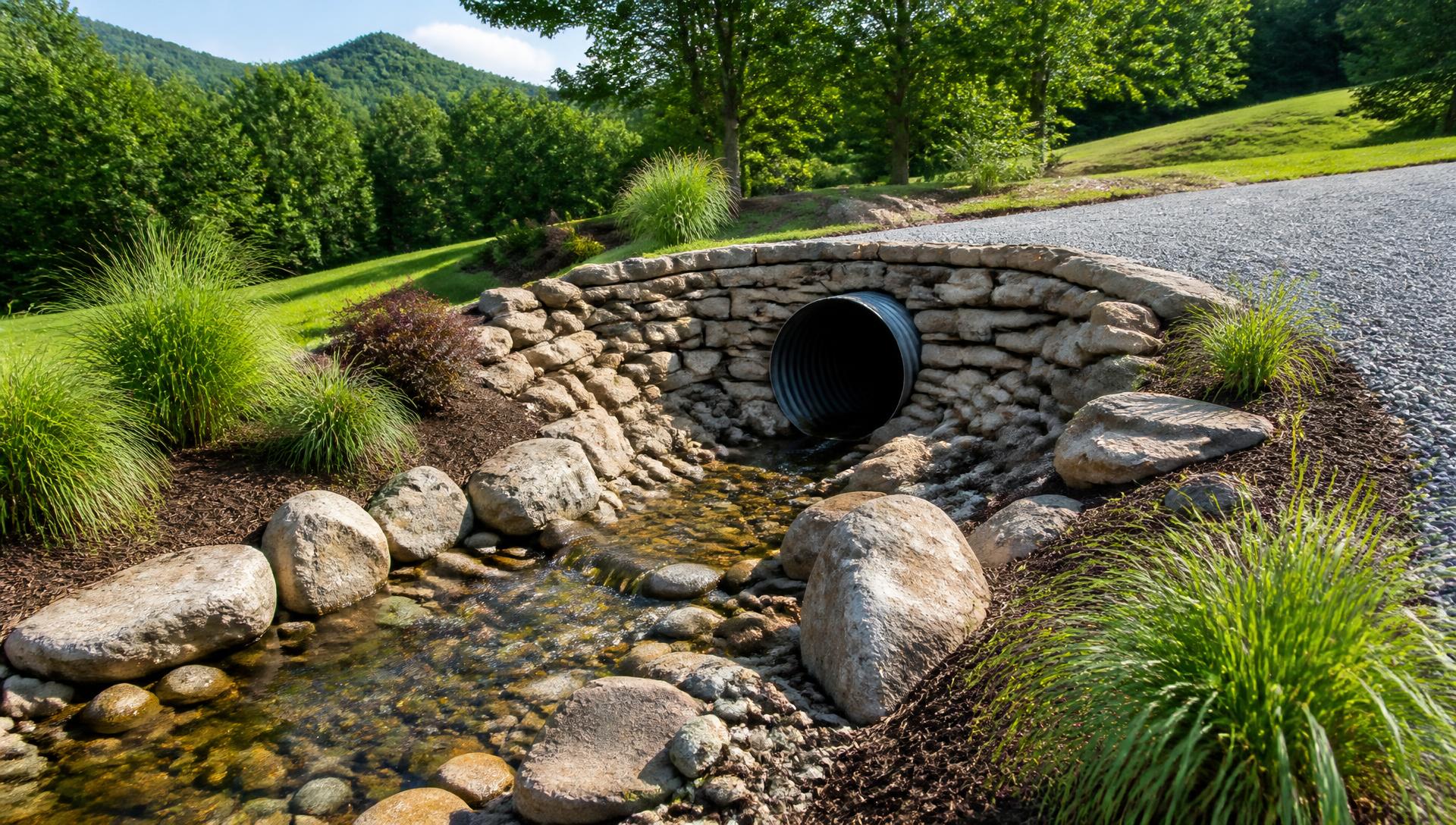
- Stopping erosion on banks that wash out every storm, often paired with drainage and erosion control.
- Protecting foundations, driveways and pools from sliding or undermined soil.
- Widening a driveway or building a parking pad on a sloped lot — see driveways and property access.
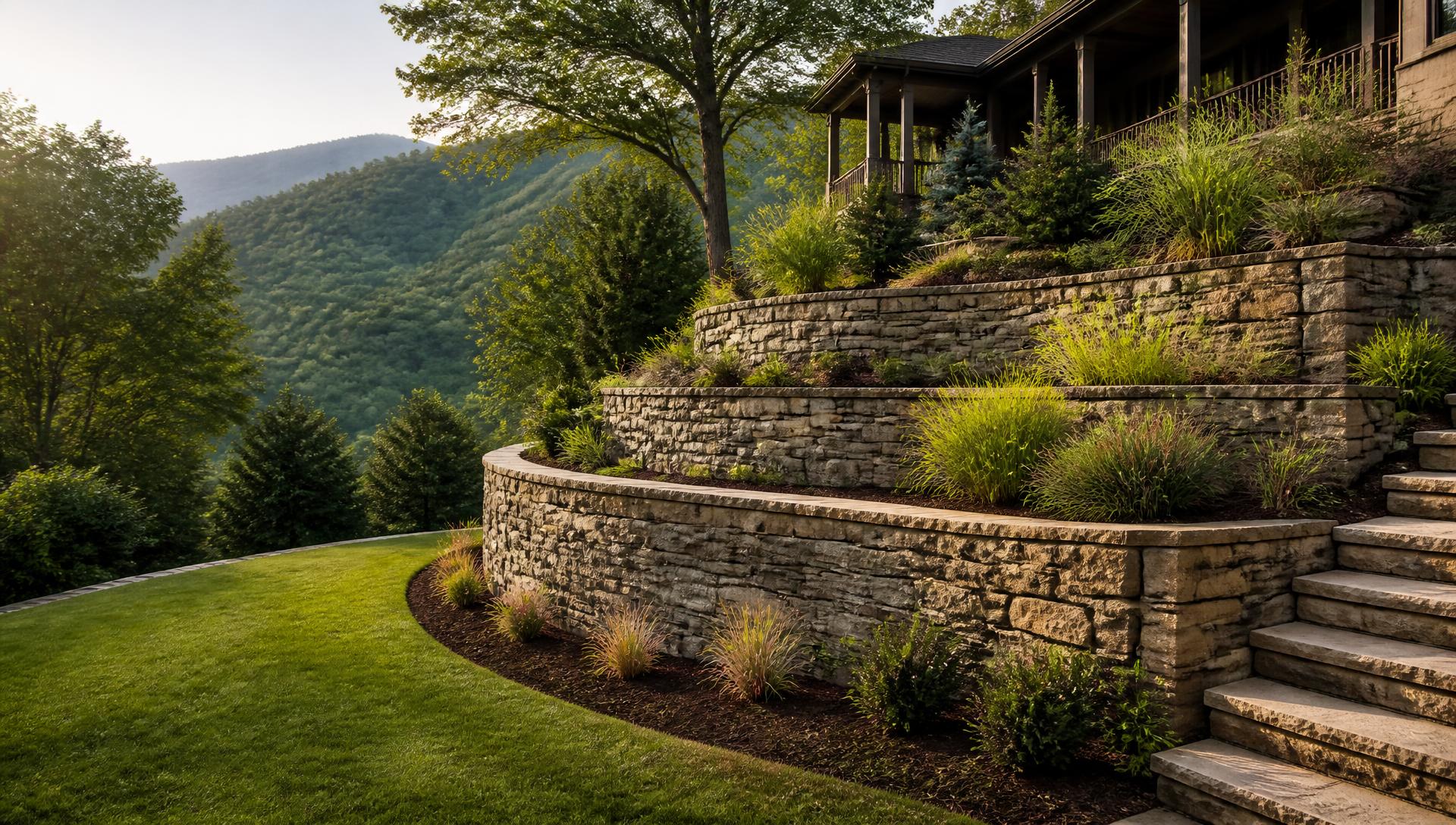
- Terracing a hillside into tiers for gardens, lawns or outdoor living rooms.
- Curb appeal and property value — a well-built wall is one of the most visible upgrades on a front yard.
Structural vs. Non-Structural Retaining Walls
The first question isn't material — it's what the wall has to do. Every retaining wall falls into one of two groups.
Structural retaining walls hold back real soil load. Think a 4-foot or taller wall below a driveway, a wall supporting a patio or pool deck, a wall with a slope above it, or any wall near a structure or road. These walls need a designed base, compacted gravel backfill, drainage behind the wall, and often geogrid reinforcement — layers of grid that tie the wall into the soil behind it. In most North Georgia counties, walls over 4 feet (measured from the bottom of the footing) or walls carrying a surcharge like a driveway typically require an engineered design and a permit. Requirements vary by city and county, so we confirm them for every project.
Non-structural (decorative) retaining walls — sometimes called landscape walls, garden walls or seat walls — hold back little or no soil. Raised planting beds, low borders along a walkway, seat walls around a fire pit and walls under about 2–3 feet usually fall here. They still need a solid, compacted base and drainage, but they don't carry the same engineering demands.
The mistake we see most often is a decorative wall doing a structural job: a stack of landscape timbers or small garden blocks holding back 4 feet of wet clay. It looks fine for a few seasons, then it bows, leans and fails.
Segmental Block Retaining Walls
Segmental retaining wall (SRW) block is the most common choice for residential retaining walls in North Georgia, and for good reason. These are dry-stacked, interlocking concrete units manufactured to tight tolerances. Major manufacturers — we're an authorized supplier for several, including Belgard — offer everything from smooth modern faces to tumbled blocks that look like quarried stone.
- Pros: engineered for structural use, pairs with geogrid for tall walls, long lifespan (often 50+ years when built right), wide range of colors and textures, allows curves, steps and integrated stairs, no mortar to crack.
- Cons: higher upfront cost than timber, needs a properly excavated and compacted base, and cheap installation (not the block itself) is the most common cause of failure.
- Best for: backyard leveling walls, walls below driveways, terraced hillsides, pool and patio walls. Learn more about our segmental block walls.
Timber Retaining Walls
Timber retaining walls — pressure-treated landscape timbers or railroad-tie style walls — are still common in older neighborhoods around Roswell, Marietta and Alpharetta. They're fast and inexpensive to build.
- Pros: lowest upfront cost, rustic look that suits wooded and farm properties, quick installation.
- Cons: wood rots in Georgia's humidity and wet clay, typically lasting 10–20 years; limited height without engineered deadmen anchors; insects; and older railroad ties may contain creosote you don't want near gardens or kids.
- Best for: short, temporary or low decorative walls, and rural edges where budget matters more than lifespan.
Natural Stone and Boulder Retaining Walls
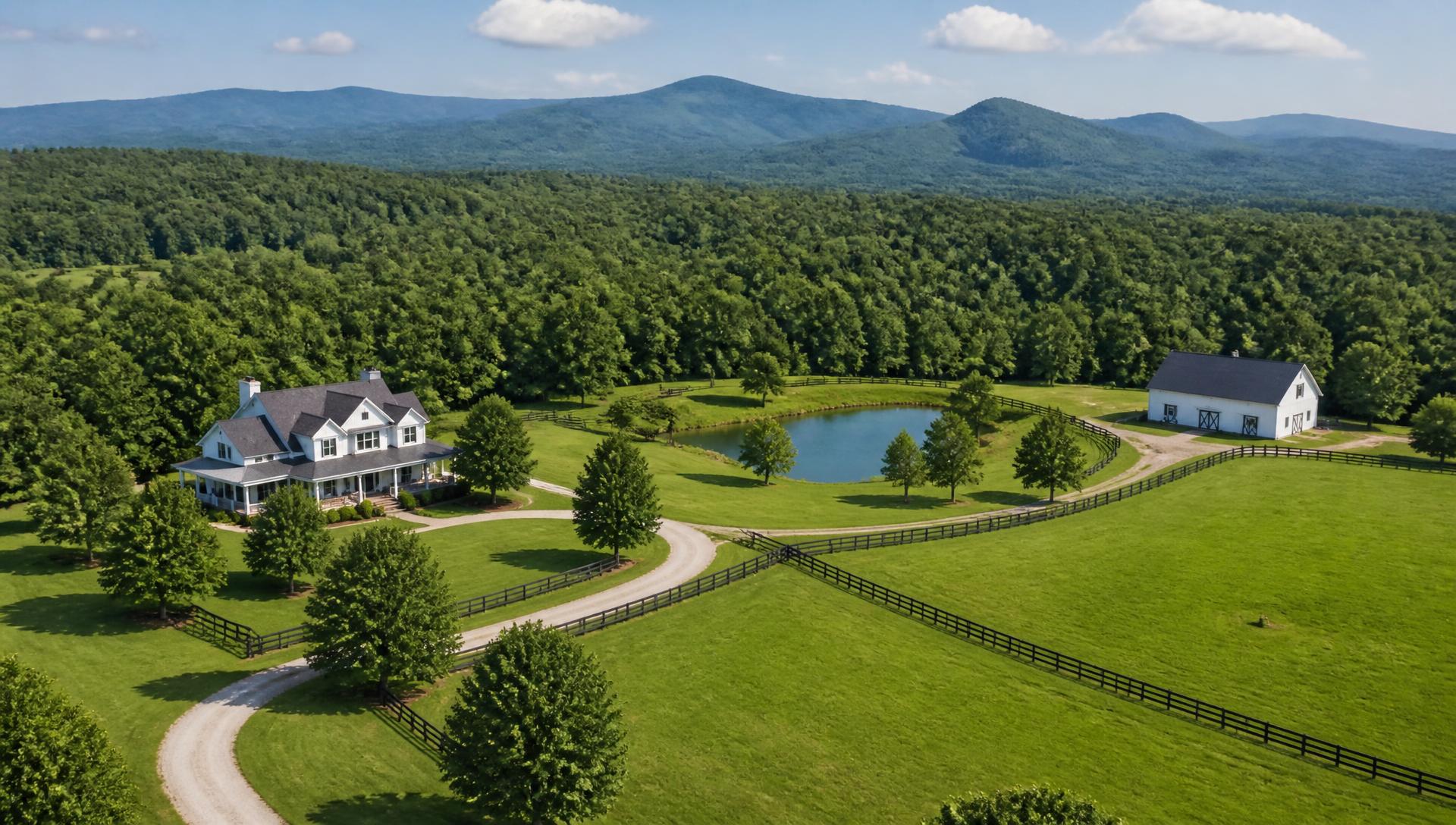
Natural stone retaining walls — dry-laid fieldstone, stacked flagstone or large boulder walls — fit beautifully on mountain and estate properties in Blue Ridge, Ellijay, Jasper and Ball Ground, and on larger lots in Milton.
- Pros: timeless, natural look; boulders are extremely durable; great for rustic, equestrian and lake properties; can handle significant height when set correctly with heavy equipment.
- Cons: less predictable engineering than block, cost varies with stone availability, needs skilled operators, and boulder walls take up more footprint.
- Best for: hillsides, creek banks, estate entrances and natural-looking terraces. See our boulder walls.
Poured Concrete and Veneered Walls
Poured concrete retaining walls (and block walls finished with a stone or stucco veneer) are rigid, reinforced walls used where space is tight or loads are high — next to a house, under a driveway on a steep lot, or where a wall needs to be perfectly vertical.
- Pros: very strong, thin profile, clean architectural look, can be veneered to match the house.
- Cons: highest cost, always needs engineering and weep drainage, and cracks are harder to repair than a dry-stacked wall.
- Best for: tall walls in tight spaces, commercial-grade loads and modern homes in Buckhead and intown-style lots.
Double-Sided (Freestanding) Walls
A double-sided retaining wall, also called a freestanding wall, has a finished face on both sides. Instead of holding back a hill, it's usually seen from both directions — a seat wall around a patio, a wall dividing a lawn from a garden, or the upper edge of a terraced yard where people walk on both sides.
Most block systems make dedicated freestanding units and caps, so the color and texture match your retaining walls. Keep in mind: a freestanding wall is not built to hold back soil. If one side of the wall will have more than a small amount of fill against it, it needs to be designed as a retaining wall with a finished top section — not a freestanding wall pushed past its limits.
Double-sided walls pair especially well with outdoor living spaces: fire pits, outdoor kitchens and dining areas where a built-in seat wall does double duty as seating and structure.
What Makes a Retaining Wall Last
Almost every failed wall we remove failed for the same reasons — and almost none of them are the wall material. A long-lasting retaining wall comes down to what you can't see after it's finished:
- Excavation and a compacted base — crushed stone, compacted in lifts, with the first course buried below grade.
- Drainage behind the wall — clean gravel backfill and a perforated drain pipe that daylights. Water pressure behind a wall is the number one cause of failure in red clay.
- Geogrid reinforcement on taller structural walls, laid to the engineer's length and spacing.
- Managing surface water above the wall, so storm runoff doesn't pour over or behind it.
- Correct setback (batter) so the wall leans slightly into the hill.
Removing and Replacing a Failing Retaining Wall
If you own an older home in North Fulton, Forsyth or Cherokee County, there's a good chance you have a wall that's past its prime. Signs of a failing or compromised retaining wall include:
- Leaning, bulging or bowing sections
- Rotting, cracked or split timbers
- Blocks shifting, separating or falling out of the face
- Soil or water seeping through or under the wall
- Sinkholes, cracks or settling in the soil or pavement above the wall
- Standing water at the base after rain
How We Handle Retaining Wall Removal
Retaining wall removal has to be sequenced carefully — the moment you pull a failing wall, the soil behind it wants to move. We start by assessing what the wall is holding up and whether anything above it (a driveway, patio, fence or structure) needs support during the work. Then we remove the old wall and debris, excavate failed backfill and saturated clay, rebuild a proper base and drainage system, and install the new wall — typically segmental block or boulders, with geogrid where needed.
In many cases, replacing a failed timber wall is also the right time to rethink the yard: a taller, straighter block wall can gain you usable space the old wall never did. And if the wall failed because of water, we fix the water first — through grading, drains or erosion control — so the new wall doesn't repeat the same story.
How Much Does a Retaining Wall Cost in North Georgia?
Retaining wall cost depends on height, length, material, access for equipment, soil conditions, drainage needs and whether engineering and permits are required. Timber is the cheapest upfront but the most expensive over time. Segmental block and boulders cost more to install but typically last decades longer. Removal of an existing wall, hauling and correcting drainage add to the project.
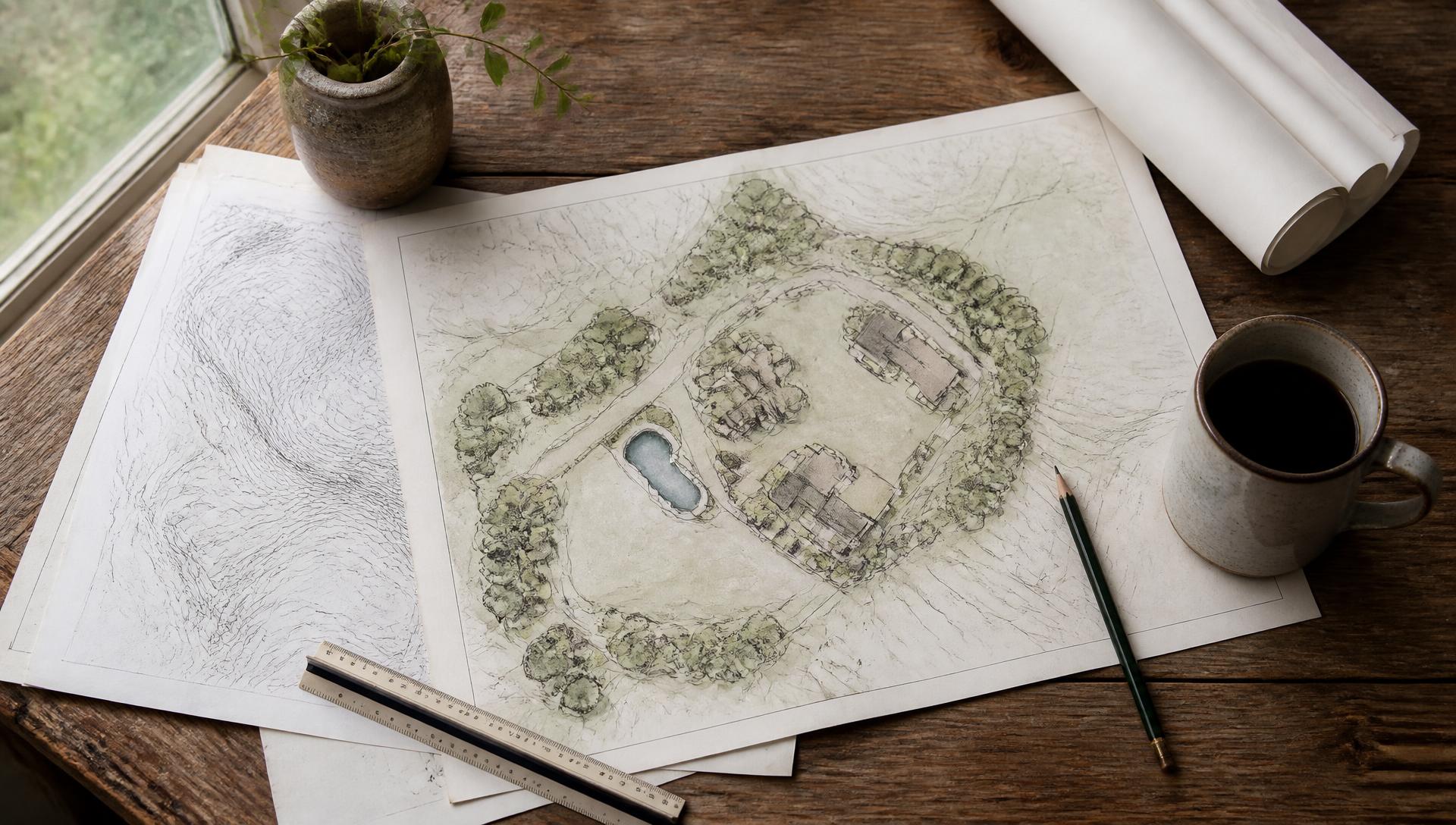
Because every slope is different, we don't quote walls off a photo. We walk the property, measure, look at where the water comes from, and give you options at more than one price point. For larger yard transformations, we often start with property design and 3D renderings so you can see the finished wall before we build it.
Retaining Wall Contractor Serving North Georgia and North Metro Atlanta
John Franklin Land Group builds retaining walls across North Georgia and North Metro Atlanta, including Milton, Alpharetta, Roswell, Cumming, Canton, Woodstock, Marietta, Buckhead, Ball Ground, Jasper, Ellijay and Blue Ridge.
Whether you need a new retaining wall to level a backyard, a decorative seat wall for a patio, or replacement of a failing timber wall, we handle the full job — design, excavation, drainage, construction and cleanup — with one crew accountable from start to finish. See our full retaining walls service.
Have a wall that's leaning, or a slope you want to turn into usable space? Request a site visit and we'll walk your property, explain your retaining wall options, and give you a straight answer on what it will take.