Every property starts at the road. Before a house, barn, arena or backyard can be built, you need a way in — and in North Georgia, that's rarely as simple as pouring a slab. Steep grades, red clay, heavy summer storms and wooded lots turn a driveway into a real piece of engineering. As a driveway contractor serving Milton, Alpharetta, Cumming, Canton, Woodstock, Ball Ground, Jasper, Ellijay and Blue Ridge, we build new property access, rebuild washed-out gravel driveways and install concrete and paver driveways every month. This guide covers the materials, the land clearing and tree removal it takes to open a new drive, and the erosion control and water management that keep your access from washing away.
Why Driveways Fail in North Georgia
Almost every failing driveway we're called to look at fails for the same reason: water. North Georgia gets roughly 50 inches of rain a year, often in short, violent storms. Our clay soils don't absorb that water — they shed it. When a driveway is built without a plan for where runoff goes, the drive itself becomes the ditch.
The common symptoms are easy to spot:
- Ruts and gullies down the center or edges of a gravel drive after every storm.
- Gravel washed into the road or piled at the bottom of the hill.
- Cracked or sinking concrete, usually where water has undermined the base.
- Potholes and soft spots where the sub-base was never properly compacted.
- Culverts clogged or crushed, sending water across the drive instead of under it.
Driveway Material Options: Pros and Cons
There's no single best driveway material — there's the right material for your grade, budget, use and look. Here's how the main options compare for North Georgia driveway installation.
Gravel Driveways
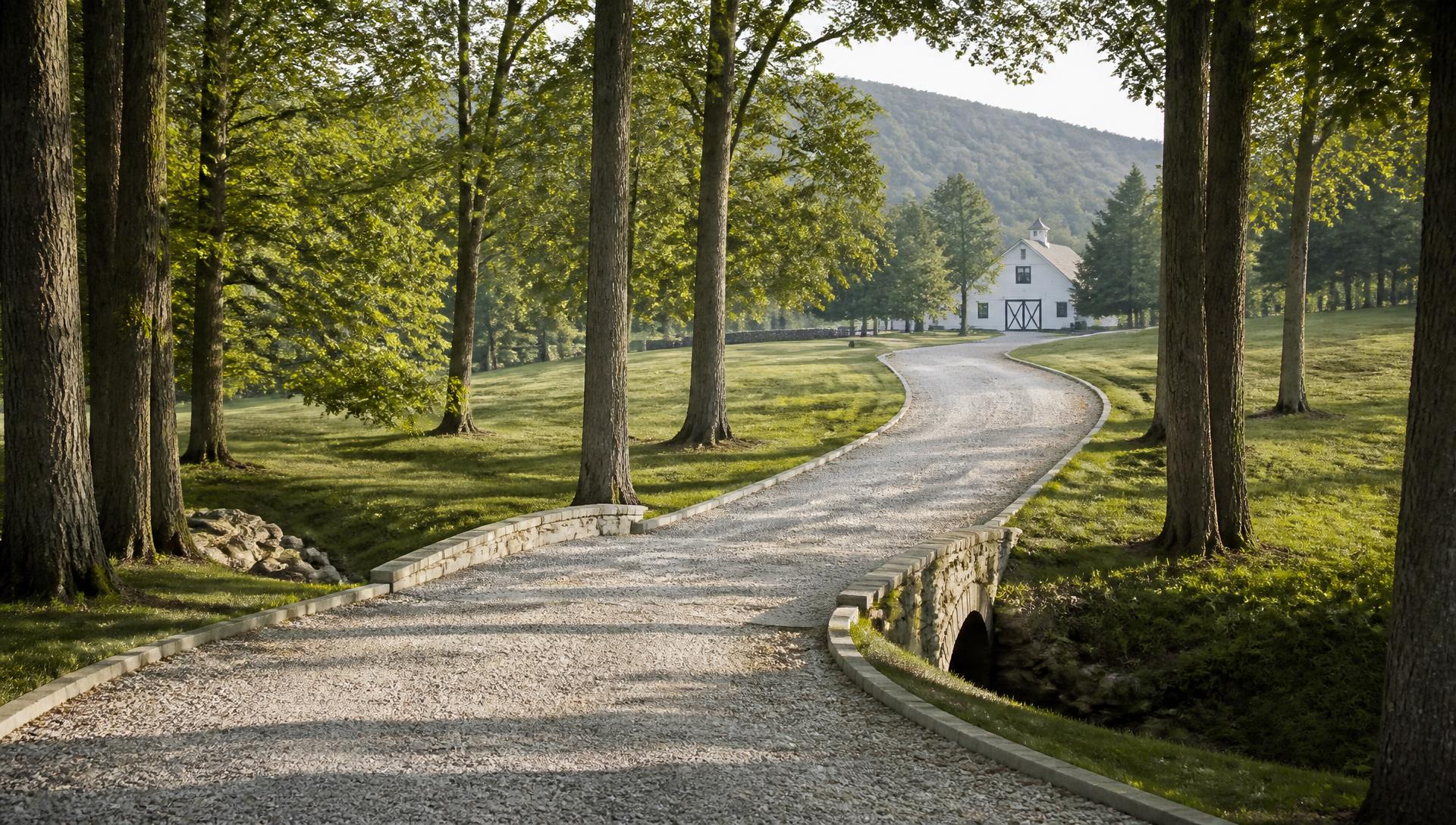
Gravel driveways are the workhorse of rural and acreage properties across Cherokee, Forsyth, Pickens, Gilmer and Fannin counties. Done right, a gravel drive is a layered system: a graded, crowned sub-grade, geotextile fabric where the soil is soft, a compacted base of GAB (graded aggregate base), and a top layer of #57 stone or crusher run.
Pros: lowest cost per foot, easy to extend, ideal for long drives and farm roads, handles trucks and trailers, repairs are simple. Cons: needs periodic regrading and top-up, can rut on steep grades without proper drainage, and loose stone migrates on slopes over about 10–12%.
Concrete Driveways
Concrete driveways are the standard for homes in Milton, Alpharetta, Johns Creek and Roswell. A properly built slab is 4–6 inches thick on a compacted stone base, reinforced with rebar or wire mesh, with control joints to manage cracking.
Pros: long lifespan (often 30+ years), low maintenance, clean look, handles steep grades well with a broom finish for traction. Cons: higher upfront cost, cracks are hard to repair invisibly, and a poor base will fail no matter how good the pour looks. Stamped and exposed-aggregate finishes add character at a higher price.
Paver Driveways
Paver driveways — concrete pavers, clay brick or natural stone — are the premium option for estate entrances and front yards. Individual units sit on a compacted base and bedding layer, locked together with polymeric sand and edge restraints.
Pros: the best curb appeal, individual pavers can be lifted and replaced, flexible system that resists cracking, and permeable pavers let stormwater soak in instead of running off. Cons: highest upfront cost, and the base preparation is critical — skip it and pavers settle and shift. We often pair paver aprons with concrete or gravel drives to put the budget where it shows. See our front yard remodeling work for examples.
Asphalt and Hybrid Driveways
Asphalt driveways cost less than concrete and flex slightly with freeze-thaw, which suits longer drives. They need sealing every few years and soften in summer heat. Many of our acreage clients choose a hybrid: gravel for the long run through the property and concrete or pavers for the last stretch near the house, the parking court and any steep section where gravel won't stay put.
Erosion Control and Water Management for Driveways
The material is what you see. Drainage is what makes it last. Every driveway we build starts with a plan for water — where it comes from, where it wants to go, and how to get it there without taking the road with it. Our drainage and erosion control work and driveway work are almost always the same project.
- Crown and cross-slope: shaping the drive so water sheds to the sides instead of running down the center.
- Roadside ditches and swales lined with stone or erosion-control matting.
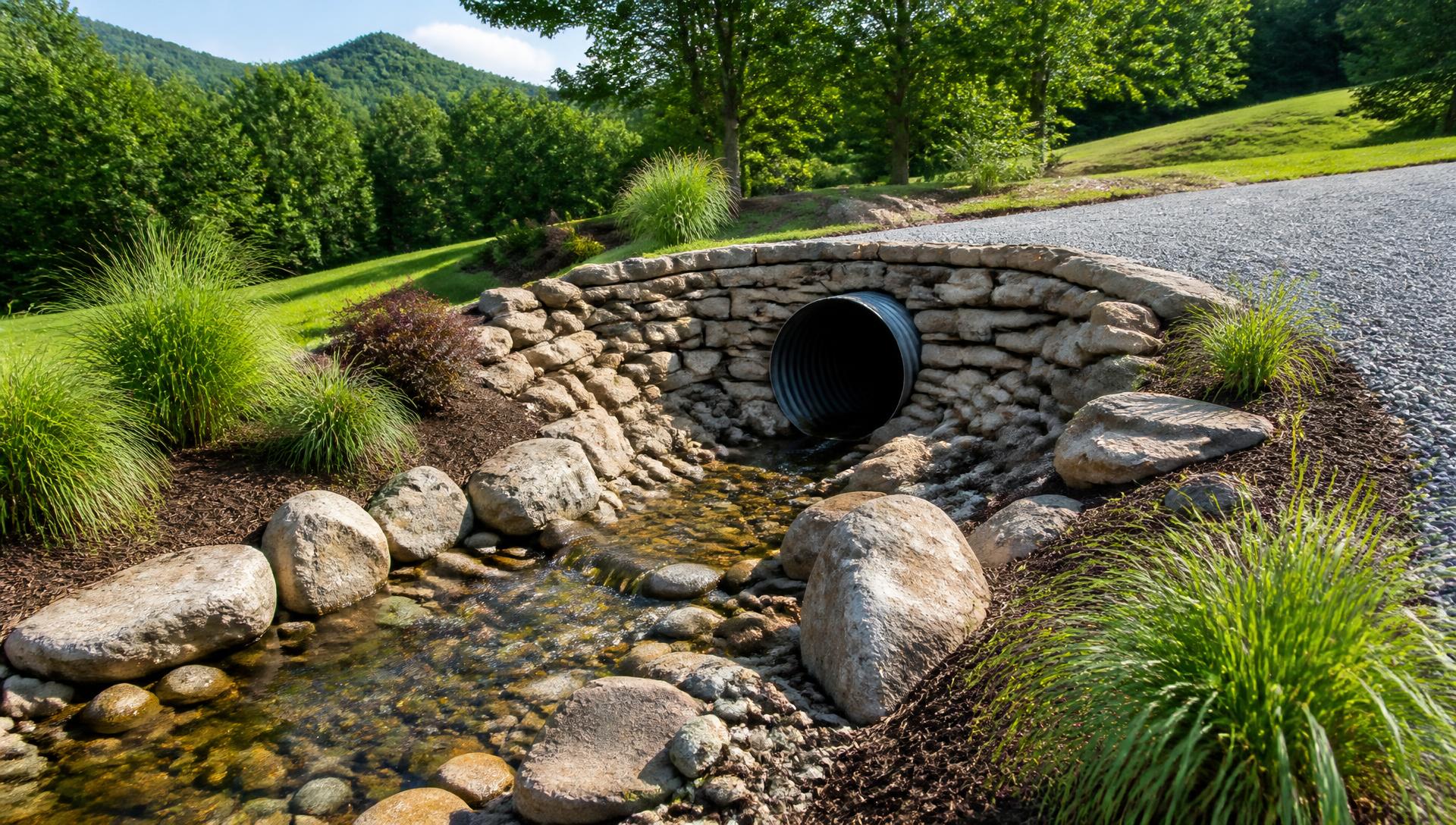
- Culverts sized for real storm flow at every low point and stream crossing.
- Water bars and turnouts on long gravel grades to break up runoff before it builds speed.
- French drains and trench drains at the bottom of paved drives near garages.
- Stabilized shoulders with seed, straw and matting so the edges don't erode.
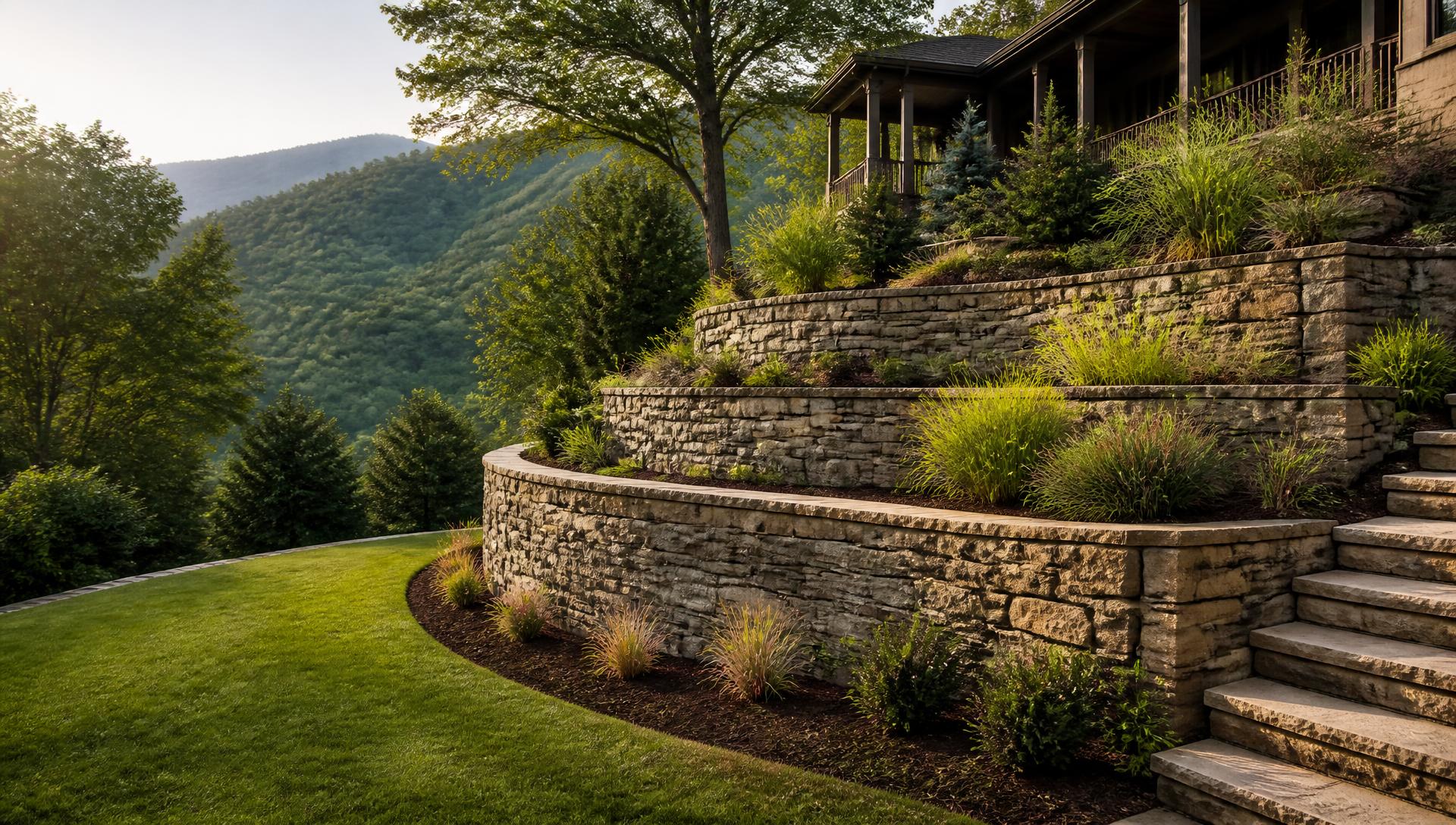
- Retaining walls where the drive cuts into a hillside — see our guide to retaining walls.
Land Clearing and Tree Removal for New Driveways
Many of the properties we work on in Ball Ground, Jasper, Ellijay, Blue Ridge and north Cherokee County are raw, wooded acreage. Before a driveway can be built, the route has to be opened. Our land clearing process for a new access road includes:
- Walking and flagging the route to follow the natural contour and avoid the steepest grades, wet areas and specimen trees.
- Tree removal and forestry mulching along the corridor, wide enough for the drive, ditches and sight lines.
- Stump grinding or removal — stumps left under a driveway rot and create sinkholes later.
- Topsoil stripping, so the drive sits on firm sub-soil instead of organic material.
- Cut-and-fill grading to bring the route to a workable slope.
- Installing silt fence and erosion controls before and during construction, as most counties require.
Planning New Property Access
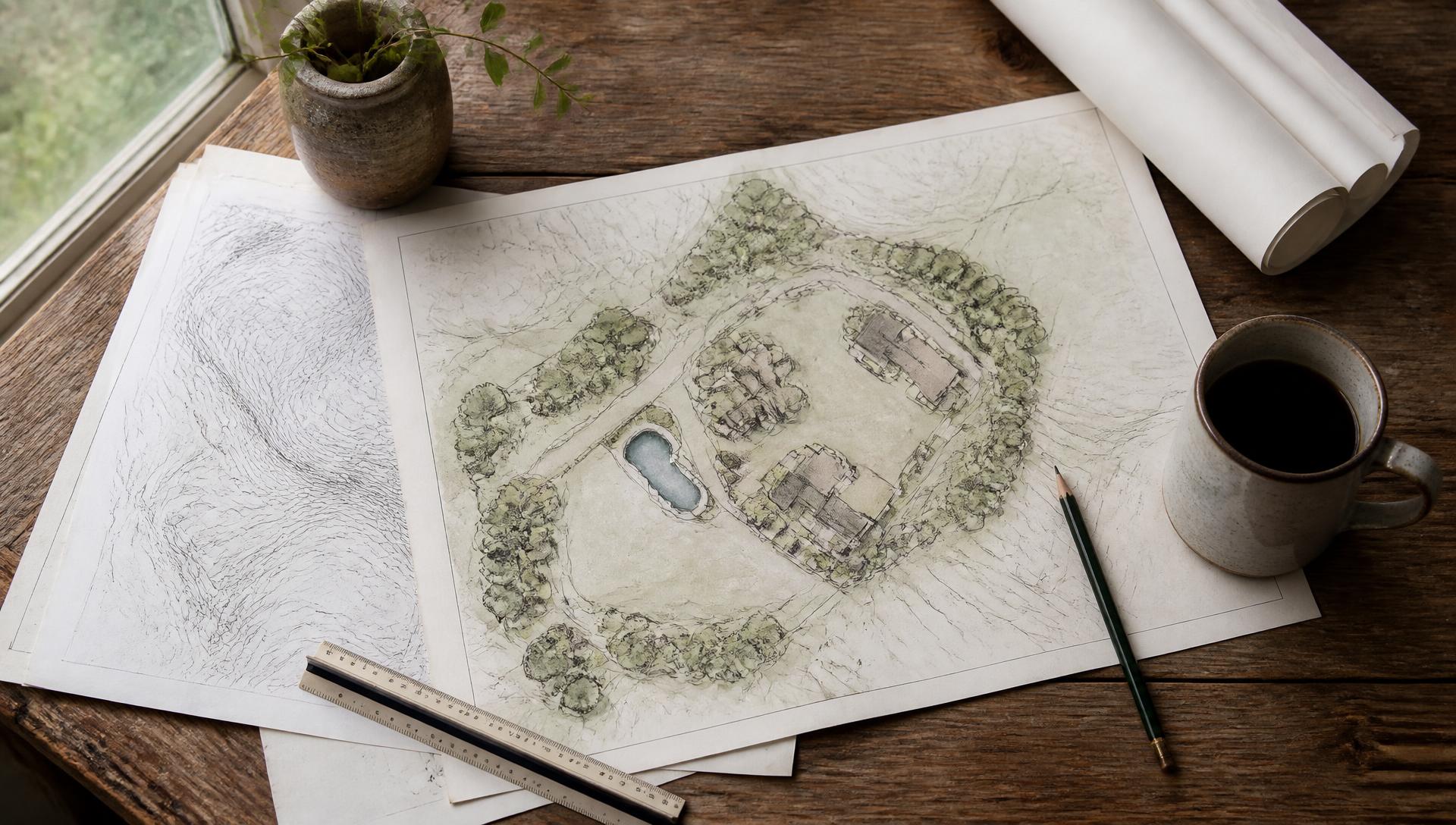
If you've just bought land, the driveway is the first decision that shapes everything else — where the house sits, how construction trucks get in, where the barn and pasture go. A few things to settle early:
- Road entrance permits: a new curb cut onto a county road or a state route requires approval, and sight-distance rules decide where it can go. Our land permits guide lists county contacts.
- Grade: we aim for under 12–15% where possible. Steeper drives need concrete, switchbacks or both.
- Width and turning radius: fire trucks, concrete trucks and horse trailers all need room — typically 12 feet minimum with wider curves.
- Construction access first: a well-built gravel base can serve construction traffic and later be paved over.
- Gates and entrances: columns, gates and fencing are easier to plan in from day one. See fencing.
Driveway Costs in North Georgia
Every site is different, but the biggest cost drivers are length, grade, how much clearing and grading is needed, drainage structures, and the surface material. As a rough order: gravel is the most economical per foot, asphalt next, then concrete, with pavers at the top. Clearing a wooded route and building culverts can cost as much as the surface itself — which is why we walk every property before quoting.
Repairing a washed-out driveway is almost always cheaper than rebuilding it later. If your gravel drive washes every storm, the fix is usually grading and drainage, not more stone.
Driveway Maintenance: Keeping Access in Shape for Decades
Even the best-built driveway needs a little attention. For gravel driveways, plan on regrading and restoring the crown every year or two, topping up stone in high-traffic areas, and clearing ditches and culvert inlets after major storms — a clogged culvert is the number one cause of sudden washouts we see in Cherokee and Forsyth counties. Keep leaves and pine straw out of ditches in the fall, when North Georgia's heavy autumn rains arrive.
For concrete driveways, seal control joints and cracks before water gets under the slab, keep downspouts from dumping onto the edges, and avoid de-icing salts on new concrete. For paver driveways, refresh polymeric sand every few years and reset any pavers that shift. For asphalt, sealcoat every two to four years and fill cracks before winter. A few hours of maintenance a year protects an investment that often costs more than a new vehicle.
Questions to Ask Any Driveway Contractor
Whether you hire us or someone else, the right questions will tell you a lot about how your driveway will hold up. Ask how thick the stone base will be and how it will be compacted. Ask where the water will go during a two-inch storm. Ask whether culverts are sized for the drainage area or just for the ditch. Ask who handles the county road entrance permit and erosion-control requirements. And ask to see a driveway they built five years ago — not last month. A contractor who talks about base, drainage and grade before talking about color and finish is usually the one whose work still looks good a decade later.
Driveway Contractor Serving North Georgia and North Metro Atlanta
We build driveways and property access across Milton, Alpharetta, Cumming, Canton, Woodstock, Roswell, Johns Creek, Ball Ground, Jasper, Ellijay, Blue Ridge, Marietta and Buckhead. Whether it's a paver entrance on a Milton estate, a half-mile gravel access road in Ellijay, or a steep concrete drive in Canton, the approach is the same: plan the water, build the base, then choose the surface.
See our full driveways and property access services, or our local pages for Milton, Cumming and Canton.
Build the road right and everything behind it gets easier. Planning a new driveway, fixing a washout or opening access to raw land? Request a property consultation and we'll walk the route with you.